
Oatmeal sandwich cookies bring together everything to love about a classic oatmeal cookie, with an extra layer of sweetness in the middle. These cookies have soft, chewy centers, lightly crisp edges, and a warm hint of cinnamon. The filling is made with brown butter, cream cheese, and vanilla, creating a smooth, creamy contrast to the hearty oatmeal cookies. Every bite combines the comforting flavor of oats and brown sugar with a rich, buttery finish.
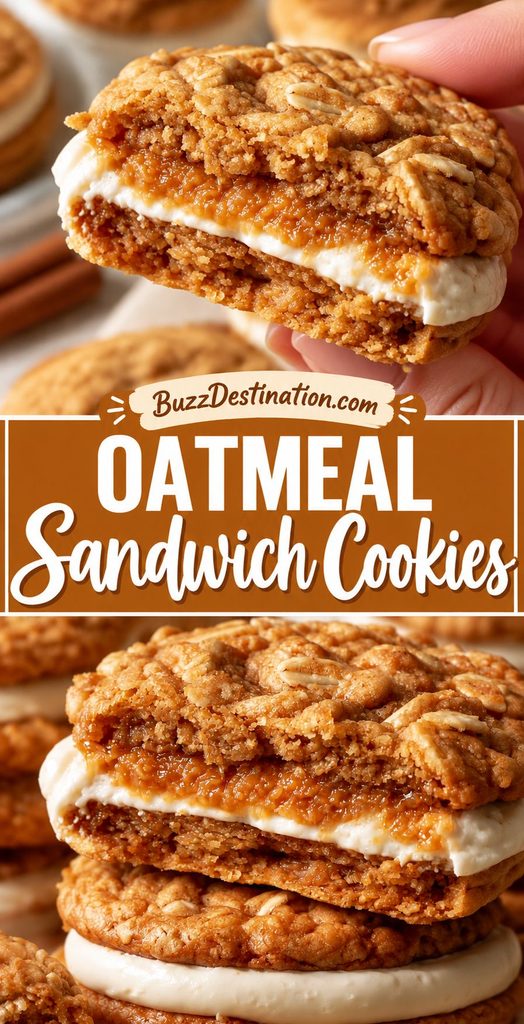
What makes these oatmeal sandwich cookies especially appealing is the brown butter used in both the cookies and the filling. Browning the butter develops a nutty aroma and deeper flavor that gives this homemade treat something special without requiring complicated techniques. You can make the cookies with pumpkin puree or an egg, depending on your preference, then sandwich them together with the cream cheese filling for a dessert that looks lovely on a cookie platter and tastes just as good alongside a cup of coffee or tea.
Why You’ll Love This Recipe
- Rich brown butter flavor: Brown butter adds warm, nutty notes to both the cookies and the creamy filling.
- Soft and chewy texture: Old-fashioned oats give the cookies their familiar hearty texture, while brown sugar helps keep the centers moist and tender.
- A creamy middle: The brown butter cream cheese filling adds a smooth, tangy sweetness that balances the cookies.
- A choice of binder: The recipe works with either pumpkin puree or a large egg, giving you two options depending on what you have available.
- A beautiful homemade dessert: Once assembled, the cookies look like bakery-style sandwich treats, making them suitable for dessert trays, gatherings, or an afternoon snack.
- Make-ahead friendly: You can prepare the brown butter in advance and allow it to return to room temperature before making the cookies and filling.
Preparation and Tools
Before starting, gather a light-colored saucepan, a heatproof bowl, mixing bowls, a whisk or spatula, measuring cups and spoons, a baking sheet, parchment paper, and a hand mixer or stand mixer for the filling. A light-colored saucepan is particularly helpful when browning butter because it makes the changing color of the milk solids easier to see.
You will also need a cooling rack and a spoon or small cookie scoop to portion the dough. For assembling the sandwiches, a small offset spatula or spoon works well, although a piping bag can make the filling easier to distribute evenly.
Measure the flour by fluffing it in its container and spooning it into the measuring cup before leveling it. This helps prevent adding too much flour, which can make the cookies dry or dense.
The brown butter needs time to cool before it is mixed into the cookie dough and cream cheese filling. Prepare it first so it can cool while you organize the remaining ingredients. The butter should be soft enough to mix easily but not warm or melted when you use it in the recipe.
Preparation Tips for Oatmeal Sandwich Cookies
Brown the butter carefully
Brown butter is the defining flavor in these cookies, so take your time with this step. As the butter melts and cooks, its milk solids will gradually turn golden brown and develop a nutty aroma. Watch closely toward the end because the color can change quickly. Remove the saucepan from the heat once the butter has browned, and transfer it to a heatproof bowl to stop the cooking.
The recipe uses 1 cup of unsalted butter to make the brown butter. You will need 1/2 cup for the oatmeal cookies and the remaining 1/3 cup for the cream cheese filling. Measure the portions after browning and cooling, rather than assuming the original volume will remain exactly the same.
Choose pumpkin puree or egg
The cookie dough allows you to use either 1/4 cup of pumpkin puree or one large egg. Pumpkin puree provides moisture and a subtle pumpkin flavor, while an egg gives the cookies a more traditional cookie structure. Choose one option and use it as listed; do not add both.
If you use pumpkin puree, make sure it is plain pumpkin puree rather than pumpkin pie filling, which contains additional ingredients and seasonings.
Bring the ingredients to room temperature
The brown butter for the cookies and filling should be at room temperature before mixing. The cream cheese should also be softened so it blends smoothly with the butter and powdered sugar. Cold ingredients can make the filling difficult to combine evenly, while warm brown butter can soften the filling too much.
Keep the oats and cinnamon evenly distributed
Old-fashioned oats give these cookies their characteristic chew. Combine them thoroughly with the flour, baking soda, cinnamon, and salt so each cookie has a balanced texture and flavor. Ground cinnamon adds gentle warmth without overpowering the brown butter.
Ingredients for Oatmeal Sandwich Cookies
This recipe has three main components: the brown butter, the chewy oatmeal cookies, and the brown butter cream cheese filling.
Brown Butter
– Unsalted butter: You will need 1 cup (226 g) of cold butter, cut into tablespoon-sized pieces. Starting with evenly sized pieces helps the butter melt more consistently and makes it easier to monitor the browning process.
Chewy Oatmeal Cookies
- Brown butter: Use 1/2 cup (113 g) of the prepared brown butter, cooled to room temperature. It gives the dough a deep, nutty flavor.
- Dark brown sugar: One packed cup (200 g) adds moisture, sweetness, and a rich molasses note that complements the oats.
- Pumpkin puree or egg: Use 1/4 cup (60 g) of pumpkin puree or one large egg at room temperature. Either option provides moisture and helps bind the dough.
- Vanilla extract or vanilla bean paste: One teaspoon (5 g) enhances the warm, buttery flavor.
- All-purpose flour: One and one-quarter cups (160 g), measured by fluffing and spooning, provides structure.
- Old-fashioned oats: Three-quarters of a cup (80 g) gives the cookies their hearty, chewy texture.
- Baking soda: One teaspoon helps the cookies spread and develop their texture as they bake.
- Ground cinnamon: Half a teaspoon adds a gentle spice that works naturally with brown sugar and oats.
- Fine salt: Half a teaspoon balances the sweetness and brings out the flavor of the brown butter.
Brown Butter Cream Cheese Filling
- Remaining brown butter: Use 1/3 cup (75 g), cooled to room temperature, for a rich and nutty filling.
- Full-fat cream cheese: One-quarter cup (56 g) adds creaminess and a slight tang that balances the sweetness.
- Powdered sugar: One cup (125 g) sweetens the filling and helps create a smooth consistency.
- Vanilla extract or vanilla bean paste: One teaspoon (5 g) adds fragrance and rounds out the buttery flavor.
- Fine salt: One-quarter teaspoon sharpens the flavor and prevents the filling from tasting overly sweet.
How to Make Oatmeal Sandwich Cookies
Step 1: Brown the Butter
Place the cold, tablespoon-sized pieces of unsalted butter in a light-colored saucepan over medium heat. Let the butter melt, stirring or swirling the pan occasionally so it heats evenly.
As the butter cooks, it will foam and bubble. Continue watching the milk solids at the bottom of the pan, stirring as needed. They will gradually turn golden brown, and the butter will develop a nutty aroma. Once the solids are browned, remove the pan from the heat promptly to prevent burning.
Transfer the brown butter to a heatproof bowl and let it cool. Measure out 1/2 cup (113 g) for the cookie dough and 1/3 cup (75 g) for the filling. Allow both portions to reach room temperature before using them.
Step 2: Prepare the Dry Ingredients
In a medium bowl, combine the all-purpose flour, old-fashioned oats, baking soda, ground cinnamon, and fine salt. Whisk until the ingredients are evenly distributed.
Mixing the dry ingredients separately helps prevent concentrated pockets of baking soda or cinnamon in the finished cookies. Set the bowl aside while you prepare the wet ingredients.
Step 3: Mix the Cookie Dough
In a separate mixing bowl, combine the room-temperature brown butter and packed dark brown sugar. Mix until the ingredients are evenly blended and the mixture looks smooth.
Add either the pumpkin puree or the room-temperature egg, followed by the vanilla extract or vanilla bean paste. Mix until everything is incorporated.
Add the dry ingredients to the wet mixture. Stir until the flour is just incorporated and the oats are evenly distributed throughout the dough. Avoid overmixing once the flour has been added, as excessive mixing can make the cookies less tender.
Step 4: Portion the Cookies
Line a baking sheet with parchment paper. Portion the dough into evenly sized mounds and arrange them on the prepared baking sheet, leaving enough space between them for spreading.
Keeping the portions similar in size helps the cookies bake evenly and makes assembling the sandwiches easier. Try to make an even number of cookies so each one has a matching partner.
Step 5: Bake and Cool
Bake the cookies according to the recipe’s baking temperature and timing. The supplied ingredient list does not specify either, so follow the established baking directions for this recipe rather than guessing at a temperature or baking time.
Look for cookies that have set edges and centers that still appear slightly soft. They will continue to firm up as they cool, so avoid waiting until the centers look completely firm before removing them from the oven.
Let the cookies rest on the baking sheet briefly before transferring them to a cooling rack. Allow them to cool completely before adding the filling. Warm cookies can melt the butter in the cream cheese mixture and cause it to slide out of the sandwiches.
Step 6: Make the Brown Butter Cream Cheese Filling
Add the room-temperature brown butter and softened full-fat cream cheese to a mixing bowl. Beat them together until the mixture looks smooth and creamy, with no obvious lumps of cream cheese remaining.
Add the powdered sugar gradually, mixing until it is fully incorporated. Stir in the vanilla extract or vanilla bean paste and the fine salt. Continue mixing until the filling is smooth and spreadable.
Check the consistency before assembling the cookies. The filling should be thick enough to stay between two cookies without squeezing out excessively. If the mixture feels too soft, allow it to cool slightly before using it. Avoid adding extra powdered sugar or other ingredients unless you are intentionally adjusting the recipe.
Step 7: Assemble the Oatmeal Sandwich Cookies
Pair the completely cooled oatmeal cookies by size so the sandwiches look even. Turn half of the cookies upside down and spread a layer of brown butter cream cheese filling over the flat side of each one.
Place a matching cookie on top and press gently until the filling reaches toward the edges. Use enough filling to create a creamy center without forcing it out of the sides.
Repeat with the remaining cookies and filling. For a neater finish, use a small offset spatula or pipe the filling onto the cookies with a piping bag. If the filling softens while you work, pause and let it firm up slightly before continuing.
Once assembled, the oatmeal sandwich cookies are ready to serve. For cleaner edges and a firmer filling, refrigerate them briefly before arranging them on a serving plate.
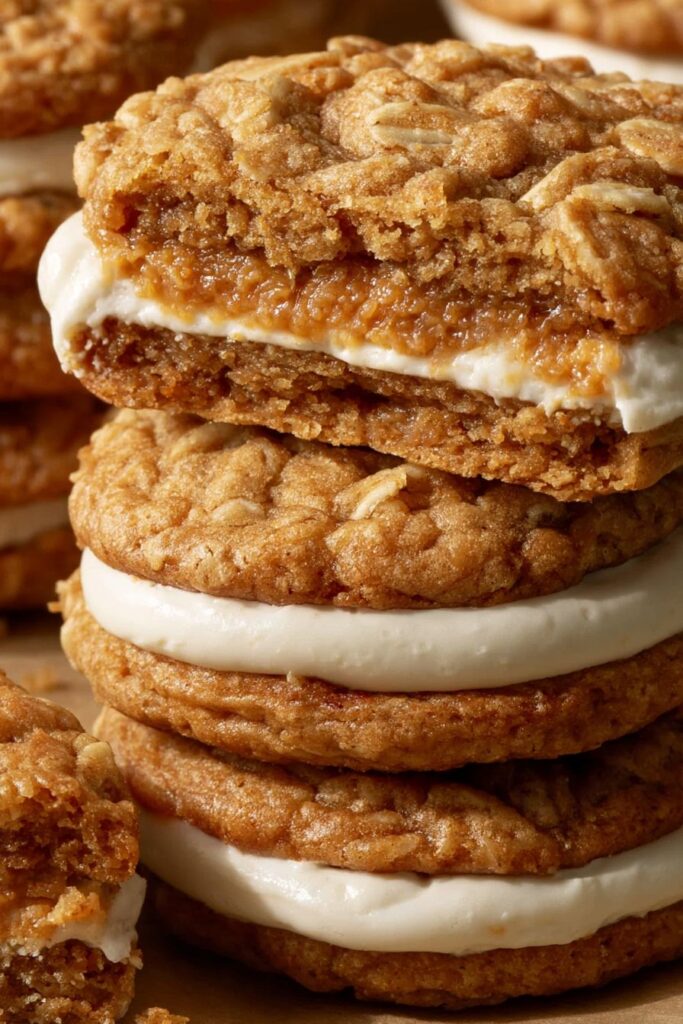
Recipe Notes and Variations
Adjust the filling to your preference
The brown butter cream cheese filling provides a balance of sweetness, tanginess, and nuttiness. For a more defined cream cheese flavor, keep the filling proportions as written rather than increasing the powdered sugar or vanilla. Using full-fat cream cheese helps create a creamy consistency.
Make evenly sized sandwiches
The appearance of sandwich cookies depends largely on consistent portions. Try to portion the dough evenly and match cookies of similar sizes after baking. A consistent filling layer also makes the cookies easier to stack and serve.
Choose your preferred cookie texture
The pumpkin puree option can give the cookies a slightly different texture and flavor from the egg version. Pumpkin also brings a subtle earthiness that pairs well with cinnamon and brown sugar. If you prefer a more traditional cookie flavor, choose the egg option.
Whichever option you use, measure it accurately and avoid adding both. The recipe is designed around one of these two alternatives.
Prepare components ahead of time
The brown butter can be prepared in advance and refrigerated in a covered container. Before using it, allow it to soften to room temperature. You can also prepare the cream cheese filling ahead, then refrigerate it in an airtight container until needed. Let it soften enough to become spreadable before assembling the cookies.
For the freshest texture, assemble the sandwiches when the cookies are completely cool and the filling is ready to spread.
Common Mistakes to Avoid
Burning the brown butter
Brown butter can move from golden and nutty to burnt very quickly. Watch the milk solids closely, especially once the butter starts foaming. Remove it from the heat as soon as the solids turn golden brown and the aroma becomes nutty. Dark, blackened solids and a harsh burnt smell indicate that the butter has gone too far.
Using brown butter while it is too warm
Warm butter can make the cookie dough too loose and can cause the cream cheese filling to become runny. Allow the measured portions to reach room temperature before mixing. The butter should be soft enough to incorporate smoothly without being hot or fully melted.
Measuring too much flour
Excess flour can produce dense cookies with less chew. Fluff the flour first, spoon it into the measuring cup, and level it off. If using a kitchen scale, measure the specified 160 g for greater consistency.
Overmixing the dough
Once the flour and oats have been added, mix only until the dry ingredients are incorporated. Overworking the dough can affect the cookies’ tenderness. Scrape the sides and bottom of the bowl to ensure that no dry flour remains hidden.
Filling the cookies before they cool
This is one of the easiest ways to end up with messy sandwiches. Even if the cookies feel cool on the surface, make sure they have cooled completely before adding the filling. Otherwise, the butter in the cream cheese mixture can soften and slide out when the top cookie is placed.
Making the filling too soft
The filling should hold its shape when spread onto a cookie. Make sure both the brown butter and cream cheese are at room temperature rather than warm. If the filling becomes too soft during assembly, allow it to firm up slightly before continuing.
What to Serve With Oatmeal Sandwich Cookies
Oatmeal sandwich cookies have a rich, buttery flavor and a sweet, creamy center, so they pair especially well with drinks and simple desserts that complement rather than compete with them.
- Coffee: Black coffee or a lightly sweetened latte balances the sweetness of the filling and brings out the toasted notes of the brown butter.
- Hot tea: Black tea, chai, or a mild cinnamon tea complements the oats and warm spices.
- Cold milk: A glass of cold milk is a classic choice for the chewy oatmeal cookies and creamy center.
- Fresh berries: Strawberries or raspberries add a fresh, slightly tart contrast to the sweet filling when serving the cookies as part of a dessert spread.
- Vanilla ice cream: Serve a cookie alongside a small scoop of vanilla ice cream for a more substantial dessert. The creamy vanilla flavor works naturally with the brown butter and cinnamon.
For a dessert platter, arrange the cookies with fresh fruit and a selection of hot or cold drinks. Their sandwich shape makes them easy to serve individually.
Storage Instructions
How to Store Oatmeal Sandwich Cookies
Because the filling contains cream cheese, assembled oatmeal sandwich cookies should be stored in an airtight container in the refrigerator. Keep them chilled between servings, and avoid leaving them at room temperature for extended periods.
For the best texture, place parchment paper between layers to help prevent the cookies from sticking together. Allow a cookie to sit out briefly before serving if you prefer a slightly softer texture, while following appropriate food-safety guidance for cream cheese fillings.
Can You Freeze Oatmeal Sandwich Cookies?
Freezing is a useful option when you want to prepare the cookies in advance. For the best results, freeze the cooled, unfilled cookies in a freezer-safe container with parchment paper between the layers. Thaw them before adding freshly prepared filling.
You can also freeze fully assembled sandwiches in a suitable airtight container, although the cream cheese filling may change texture slightly after thawing. Thaw them in the refrigerator rather than leaving them out for hours.
For the neatest presentation, freezing the cookie shells separately and assembling them after thawing is the preferred approach.
Can You Make Them Ahead?
Yes. Prepare the brown butter in advance, then store it covered until you are ready to bake. You can also bake the cookies ahead of time and keep them unfilled in an airtight container once completely cool.
Prepare the filling when convenient and refrigerate it separately if needed. Bring it to a spreadable consistency before assembling the sandwiches. This approach lets you complete the individual components ahead without having to assemble everything at once.
Estimated Nutrition
The following figures are estimates rather than verified nutritional values. Actual nutrition will depend on the ingredients used, the number and size of cookies, and how much filling goes into each sandwich.
- Calories: Approximately 250–350 per sandwich cookie
- Carbohydrates: Primarily from the flour, oats, brown sugar, and powdered sugar
- Fat: Primarily from the butter and cream cheese
- Protein: Provided in smaller amounts by the oats, flour, egg option, and cream cheese
The calorie estimate assumes a moderate-sized sandwich cookie and will vary with the final yield. Since the supplied recipe does not specify the number of cookies produced, a precise per-serving nutrition calculation is not possible.
Frequently Asked Questions
Can I use quick oats instead of old-fashioned oats?
Old-fashioned oats are the specified choice because they contribute a hearty, chewy texture. Quick oats have a finer texture and may produce a different result. For the closest match to the intended recipe, use old-fashioned oats.
Can I make these cookies without pumpkin puree?
Yes. The recipe specifically allows one large egg as an alternative to 1/4 cup of pumpkin puree. Use one option, not both. The two choices may produce slightly different flavors and textures.
Why does the butter need to cool before mixing?
Brown butter needs to reach room temperature so it can combine properly with the other ingredients. If it is too warm, it can change the consistency of the cookie dough and make the cream cheese filling too soft to hold between the cookies.
How do I know when the cookies are ready?
Look for set edges and centers that remain slightly soft. The cookies will continue to firm as they cool on the baking sheet and cooling rack. Use the recipe’s specified baking time and temperature when available, since those details were not included in the supplied ingredients.
Can I make the cream cheese filling without a mixer?
Yes. A sturdy whisk and spatula can work if the brown butter and cream cheese are properly softened. However, a hand mixer or stand mixer makes it easier to achieve a smooth filling, especially after adding the powdered sugar.
Why is my filling squeezing out of the sides?
The filling may be too soft, the cookies may still be warm, or too much filling may have been added. Make sure the cookies are completely cool, allow the filling to firm up if necessary, and spread a moderate layer over each cookie before adding the top.
A Sweet Finish
These oatmeal sandwich cookies combine chewy oats, dark brown sugar, cinnamon, and nutty brown butter with a smooth cream cheese filling. Taking a little extra care when browning the butter and cooling the cookies makes assembly easier and helps the sandwiches hold their shape. Serve them with coffee, tea, or a glass of milk whenever you want a homemade treat with a comforting oatmeal-cookie flavor and a creamy center.
Print
Oatmeal Sandwich Cookies
- Total Time: Approximately 1 hour, including cooling and assembly
- Yield: 10–12 sandwich cookies 1x
Description
These Oatmeal Sandwich Cookies feature chewy oatmeal cookies made with nutty brown butter, dark brown sugar, and cinnamon, sandwiched around a creamy brown butter cream cheese filling. Choose pumpkin puree or an egg for the cookie dough and enjoy a comforting homemade dessert with a rich, buttery flavor.
Ingredients
Brown Butter
- 1 cup unsalted butter, cold and cut into tablespoon-sized pieces (226 g)
Chewy Oatmeal Cookies
- 1/2 cup brown butter, room temperature (113 g)
- 1 cup packed dark brown sugar (200 g)
- 1/4 cup pumpkin puree OR 1 large egg, room temperature (60 g)
- 1 tsp vanilla extract or vanilla bean paste (5 g)
- 1 1/4 cups all-purpose flour, fluffed and spooned into the measuring cup (160 g)
- 3/4 cup old-fashioned oats (80 g)
- 1 tsp baking soda
- 1/2 tsp ground cinnamon
- 1/2 tsp fine salt
Brown Butter Cream Cheese Filling
- 1/3 cup remaining brown butter, room temperature (75 g)
- 1/4 cup full-fat cream cheese, room temperature (56 g)
- 1 cup powdered sugar (125 g)
- 1 tsp vanilla extract or vanilla bean paste (5 g)
- 1/4 tsp fine salt
Instructions
- Brown the butter: Place the cold butter pieces in a light-colored saucepan over medium heat. Stir or swirl as the butter melts and foams. Continue cooking until the milk solids turn golden brown and the butter smells nutty. Remove from the heat and transfer to a heatproof bowl. Measure 1/2 cup (113 g) for the cookies and 1/3 cup (75 g) for the filling. Let both portions cool to room temperature.
- Combine the dry ingredients: Whisk together the flour, old-fashioned oats, baking soda, cinnamon, and fine salt in a medium bowl.
- Mix the wet ingredients: In a separate bowl, mix the 1/2 cup room-temperature brown butter with the dark brown sugar until evenly combined. Add the pumpkin puree or egg and the vanilla, mixing until incorporated.
- Make the dough: Add the dry ingredients to the wet mixture and stir just until combined. Avoid overmixing.
- Portion the cookies: Line a baking sheet with parchment paper. Portion the dough into evenly sized mounds, leaving enough space between them for spreading.
- Bake the cookies: Bake according to the established baking temperature and timing for this recipe. The supplied recipe does not specify the oven temperature or baking time. Look for set edges and slightly soft centers.
- Cool completely: Let the cookies rest briefly on the baking sheet before transferring them to a cooling rack. Cool completely before filling.
- Prepare the filling: Beat the remaining 1/3 cup room-temperature brown butter with the softened cream cheese until smooth. Gradually mix in the powdered sugar, then add the vanilla and fine salt. Beat until creamy and spreadable.
- Assemble the sandwiches: Pair similarly sized cookies. Spread or pipe the filling onto the flat side of half the cookies, then top with the remaining cookies. Press gently until the filling reaches toward the edges without squeezing out excessively.
- Serve or chill: Serve once assembled, or refrigerate briefly for a firmer filling and neater edges.
Notes
- Use either pumpkin puree or one large egg, not both. Choose plain pumpkin puree rather than pumpkin pie filling.
- Watch the butter carefully while browning because the milk solids can burn quickly. Let the butter cool before mixing.
- Store assembled cookies in an airtight container in the refrigerator because the filling contains cream cheese.
- Prep Time: 30
- Cook Time: 10 minutes
- Category: Recipes
- Method: Baking
- Cuisine: American
Nutrition
- Serving Size: 10–12 sandwich cookies
- Calories: Approximately 250–350 calories per sandwich cookie
Leave a Comment