
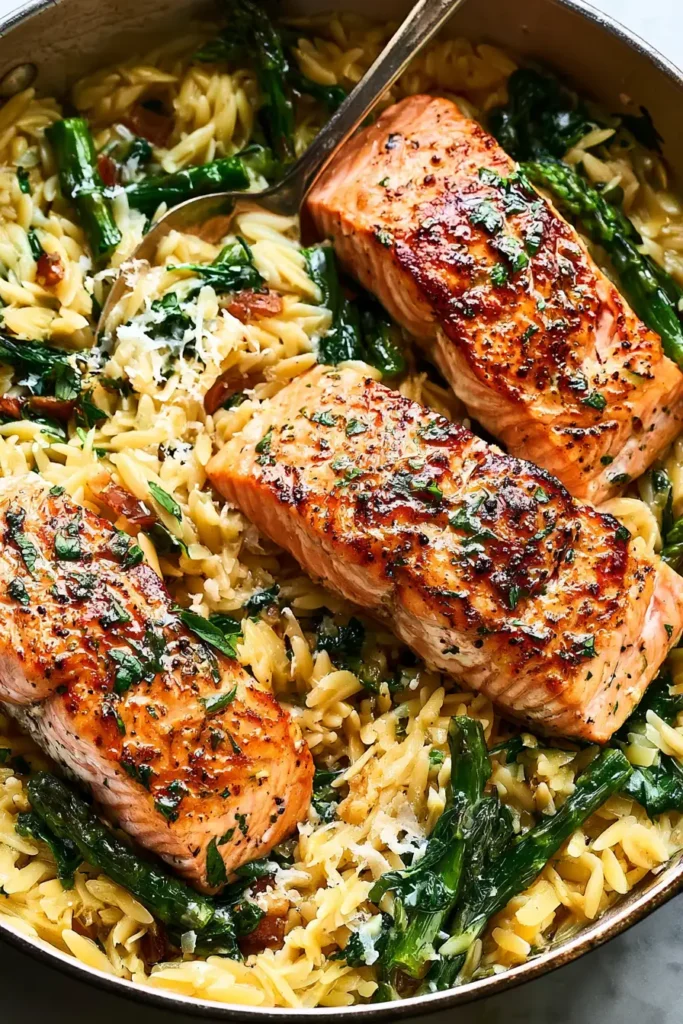
One Skillet Salmon with Lemon Orzo brings together tender, seasoned salmon fillets and creamy, lemony orzo in a single pan. The salmon is flavored with paprika, garlic powder, salt, and black pepper, while the orzo cooks in chicken broth with sautéed onion, fresh garlic, dried thyme, and Parmesan cheese. Baby spinach adds a fresh touch, and a squeeze of lemon brightens the entire dish.

This recipe is a wonderful option when you want a satisfying dinner without juggling several pots and pans. The orzo absorbs the savory broth as it cooks, creating a rich, flavorful base for the salmon. Finished with grated Parmesan, freshly ground black pepper, and optional chili flakes, this one-skillet meal balances savory, creamy, and citrusy flavors in every bite.
Why You’ll Love This Recipe
- One-skillet convenience: The salmon and orzo come together in one skillet, making dinner preparation and cleanup simpler.
- A complete meal: Tender salmon, pasta, and baby spinach combine in one dish, so you have several elements of dinner ready together.
- Fresh lemon flavor: Lemon juice cuts through the richness of the Parmesan and butter, giving the orzo a bright finish.
- Comforting texture: The orzo becomes tender as it absorbs the chicken broth, while the Parmesan adds a savory, creamy quality.
- Easy-to-find ingredients: The recipe uses familiar pantry seasonings, broth, pasta, and fresh ingredients available at most grocery stores.
- Easy to customize at the table: Freshly ground black pepper and chili flakes let everyone adjust the final seasoning to their preference.
Preparation and Tools
Before you begin, measure the orzo, chicken broth, seasonings, and Parmesan. Finely chop the yellow onion, mince the garlic cloves, rinse the baby spinach if needed, and juice half a lemon. Keeping these ingredients ready makes it easier to move between cooking the salmon and preparing the orzo without interrupting the process.
Essential Equipment
- Large, deep skillet: Choose a skillet with enough room for four salmon fillets and the orzo. A deep skillet helps contain the broth and pasta as they cook.
- Cutting board and sharp knife: Use these to prepare the onion, garlic, and lemon.
- Measuring spoons and measuring cup: Accurate measurements help maintain the balance of seasoning and liquid.
- Wooden spoon or heat-resistant spatula: This is useful for stirring the onion, garlic, and orzo without scratching the pan.
- Fish spatula or wide turner: A broad turner makes it easier to lift the salmon without breaking the fillets.
A skillet with a lid can also be useful if you need to cover the pan while the orzo cooks, although the exact cooking method should guide whether covering is necessary.
Preparation Tips
Prepare the Salmon Evenly
Use four skinless salmon fillets of reasonably similar thickness so they cook at a similar rate. Patting the fillets dry before seasoning helps the spices adhere and reduces excess surface moisture.
Divide the salt and black pepper between the salmon and the orzo preparation rather than using all the seasoning at once. The paprika and garlic powder give the fish a savory, gently sweet flavor that complements the lemon and Parmesan.
Keep the Orzo Moving
Orzo resembles rice in shape, but it is a small pasta. As it cooks in chicken broth, it releases starch that contributes to a thicker consistency. Stir it regularly, especially as the liquid begins to reduce, to help prevent the pasta from sticking to the bottom of the skillet.
Keep an eye on the liquid level during cooking. The orzo should become tender while retaining enough moisture to create a cohesive, spoonable texture.
Balance the Lemon and Parmesan
Fresh lemon juice provides a brighter flavor than bottled juice and helps balance the savory chicken broth and Parmesan. Add the measured juice from half a lemon as directed, then stir it through the orzo so the citrus flavor is distributed evenly.
Parmesan contributes saltiness and richness, so taste the finished orzo before adding any extra salt. The low-sodium chicken broth also gives you greater control over the final seasoning.
Ingredients for One Skillet Salmon with Lemon Orzo
Each ingredient has a specific role in bringing the salmon and pasta together into a balanced dinner.
Salmon and Seasonings
The four skinless salmon fillets provide the main protein and become flavorful with salt, coarsely ground black pepper, sweet paprika, and garlic powder. Paprika adds color and a mild sweetness, while garlic powder provides a concentrated savory note.
Olive oil helps cook the salmon, while a teaspoon of unsalted butter adds richness to the aromatics and orzo.
Onion and Garlic
A finely chopped yellow onion creates a savory foundation for the pasta. As it softens, it contributes gentle sweetness that complements the seasoning on the salmon. Three minced garlic cloves add a more pronounced aromatic flavor.
Orzo, Broth, and Thyme
One cup of dry orzo provides the pasta base. The three cups of low-sodium chicken broth supply the liquid needed to cook it while adding savory depth. Dried thyme introduces an earthy, herbal note that works particularly well with salmon, lemon, and Parmesan.
Spinach, Lemon, and Parmesan
Five ounces of baby spinach add color and a fresh, mild flavor. The leaves wilt into the warm orzo without requiring separate cooking.
Fresh lemon juice lifts the flavor of the finished dish, while half a cup of grated Parmesan adds a salty, savory finish and helps give the pasta a richer texture.
Freshly ground black pepper and chili flakes are reserved for serving, allowing you to adjust the final seasoning to taste.
Cooking Instructions
Step 1: Season the Salmon
Arrange the four skinless salmon fillets on a clean plate. Season them with the sweet paprika, garlic powder, and portions of the salt and coarsely ground black pepper.
Turn the fillets as needed so the seasoning covers their surfaces evenly. Set them aside while you prepare the skillet and aromatics.
Step 2: Sear the Salmon
Heat the olive oil in a large skillet over medium heat. Once the oil is hot, add the seasoned salmon fillets in a single layer.
Cook until the undersides develop a lightly golden surface, then carefully turn the fillets and cook the other side. Avoid moving the fish too frequently, as this can interfere with browning.
The salmon does not need to be completely cooked through at this stage if it will finish cooking later with the orzo. Transfer the fillets to a plate and set them aside while you prepare the pasta.
Step 3: Sauté the Onion and Garlic
Add the unsalted butter to the same skillet. Once melted, add the finely chopped yellow onion and cook, stirring occasionally, until it begins to soften.
Add the minced garlic and stir briefly until fragrant. Keep the garlic moving so it does not burn, since browned or burnt garlic can introduce bitterness into the orzo.
Step 4: Toast the Orzo with Thyme
Add the dry orzo and dried thyme to the skillet. Stir to coat the pasta in the butter and aromatic mixture.
Allowing the orzo to mingle with the onion and garlic before adding the broth helps distribute the flavors throughout the dish. Stir continuously for a short time, keeping the pasta moving so it does not scorch.
Step 5: Add the Chicken Broth
Pour the low-sodium chicken broth into the skillet and stir well, scraping up any flavorful browned bits from the bottom of the pan.
Bring the liquid to a gentle simmer and cook the orzo, stirring regularly. As the pasta absorbs the broth, the liquid will gradually reduce and the mixture will become thicker.
Continue cooking until the orzo is approaching tenderness. If the liquid reduces too quickly before the pasta is ready, lower the heat to help prevent sticking and allow the pasta to finish cooking evenly.
Step 6: Add the Spinach and Finish the Orzo
Add the baby spinach to the skillet and stir it into the hot orzo. The leaves will gradually wilt and become incorporated into the pasta. If the spinach initially takes up too much space, add it in batches, stirring as each handful softens.
Continue cooking until the orzo is tender and the spinach has wilted. Stir in the grated Parmesan and the juice from half a lemon. Mix thoroughly so the cheese is distributed throughout the pasta and the lemon brightens the savory broth.
Taste the orzo and adjust the remaining salt and black pepper as needed. The mixture should be moist and creamy rather than dry or stiff.
Step 7: Return the Salmon to the Skillet
Nestle the salmon fillets back into the orzo, arranging them over the pasta. Allow the fish to finish cooking gently if necessary, taking care not to overcook it.
Check the thickest part of each fillet for doneness. For food safety, the FDA recommends cooking fish to an internal temperature of 145°F (63°C). Once the salmon is cooked through, remove the skillet from the heat.
Step 8: Garnish and Serve
Finish the dish with freshly ground black pepper and chili flakes, if desired. Bring the skillet to the table or divide the salmon and lemon orzo among four plates.
Spoon plenty of the spinach orzo alongside each salmon fillet so every serving includes the seasoned fish, tender pasta, and flavorful sauce. Serve while warm, when the Parmesan-coated orzo has its most inviting texture.
Notes for the Best Results
- Choose a suitably sized skillet: A wide, deep skillet makes it easier to cook the salmon without crowding and gives the orzo room to simmer.
- Stir the pasta regularly: Orzo can settle and stick as the broth reduces. Frequent stirring helps it cook evenly.
- Finish with the lemon and Parmesan: Adding these toward the end preserves the lemon’s bright flavor and allows the cheese to blend into the hot pasta.
- Adjust the heat gradually: A gentle simmer is preferable to a vigorous boil, which can reduce the broth too quickly before the orzo is tender.
- Keep the salmon tender: Avoid leaving the fish in the skillet longer than necessary once it reaches the recommended internal temperature.
- Make the dish your own at serving time: Chili flakes add heat, while freshly ground black pepper provides a sharper, aromatic finish.
Common Mistakes to Avoid
Overcooking the Salmon
Salmon can become dry and firm if it cooks for too long. Sear the fillets initially, then set them aside while the orzo cooks. Return them to the skillet as needed to finish cooking, checking the thickest part of each fillet rather than relying on appearance alone.
Letting the Orzo Stick to the Pan
Because orzo absorbs liquid and releases starch, it can stick as the broth reduces. Stir frequently, scrape the bottom gently, and reduce the heat if the liquid is evaporating too quickly.
Adding Too Much Salt Too Early
The chicken broth and Parmesan both contribute savory flavor, and Parmesan can be quite salty. Start with the specified seasoning, then taste the finished pasta before adding any extra salt.
Cooking the Garlic for Too Long
Garlic cooks quickly and can turn bitter if it browns excessively. Add it after the onion has started to soften, and stir until fragrant before incorporating the orzo.
Allowing the Orzo to Become Too Dry
The pasta continues to absorb liquid as it stands. Avoid cooking it until every trace of broth has disappeared. A little moisture in the skillet helps maintain the creamy consistency, particularly after the Parmesan is stirred in.
Forgetting the Final Lemon Juice
The lemon is an important part of the flavor balance, not merely a garnish. Stir in the juice from half a lemon as specified to brighten the savory pasta and complement the salmon.
What to Serve With One Skillet Salmon with Lemon Orzo
The salmon and orzo already make a satisfying meal, but a simple side can add more freshness, crunch, or variety.
- Roasted asparagus: Its lightly caramelized edges and tender texture pair well with lemon and salmon.
- Cucumber and tomato salad: A crisp salad brings freshness and contrasts with the warm, rich orzo.
- Roasted broccoli: Lightly browned broccoli adds a pleasant bite and complements the garlic and Parmesan.
- Garlic bread: Serve a small portion for soaking up any flavorful broth remaining in the bowl.
- Steamed green beans: Their fresh flavor provides a simple vegetable side without competing with the main dish.
- Extra lemon wedges: These let everyone add a little more citrus to taste.
For an easy weeknight dinner, roasted vegetables or a fresh salad are particularly suitable because they complement the skillet meal without adding much complexity.
Storage Instructions
Refrigerating Leftovers
Allow leftovers to cool slightly, then transfer the salmon and orzo to airtight containers. Refrigerate within two hours of cooking, or within one hour if the ambient temperature exceeds 90°F (32°C).
For best food safety, refrigerate at 40°F (4°C) or below and consume within three to four days. Store the salmon and pasta together or in separate portions, depending on how you plan to reheat them.
Reheating
Reheat individual portions in a covered microwave-safe dish, stirring the orzo partway through if possible. Add a small splash of water or chicken broth if the pasta has thickened in the refrigerator.
Alternatively, reheat the leftovers gently in a skillet over low heat, adding a little liquid and stirring the orzo until warmed through. Heat the salmon until it reaches 165°F (74°C) when reheating leftovers, and avoid prolonged heating that can dry out the fish.
Freezing
Freezing is possible, but the texture may change. Cooked salmon can become drier, while the orzo may soften and lose some of its original creamy consistency after thawing. If you choose to freeze leftovers, place them in a freezer-safe airtight container and freeze promptly.
For the best quality, use within approximately two months. Thaw in the refrigerator before reheating, and ensure the food is thoroughly heated before serving.
Make-Ahead Advice
This dish is best enjoyed freshly prepared because the orzo gradually absorbs more liquid as it rests. You can make preparation easier by chopping the onion, mincing the garlic, measuring the seasonings, and grating the Parmesan in advance. Keep prepared ingredients refrigerated as appropriate until you are ready to cook.
Estimated Nutrition
The nutritional values below are estimates, not laboratory measurements. Actual values will vary with the size of the salmon fillets, the type of chicken broth, the Parmesan used, and the amount of salt retained in the finished dish.
| Nutrient | Estimated amount per serving |
|---|---|
| Calories | 550–650 kcal |
| Protein | 40–45 g |
| Carbohydrates | 40–50 g |
| Fat | 20–28 g |
| Saturated fat | 6–9 g |
| Fiber | 3–5 g |
| Sodium | 600–900 mg |
These estimates assume four servings and reasonably sized salmon fillets. The sodium content can vary substantially depending on the broth and Parmesan.
Frequently Asked Questions
Can I use salmon with the skin on?
Yes, although the recipe specifies skinless fillets. If you use skin-on salmon, the skin may affect how the fish sits in the skillet and how easily it can be turned. Cook it carefully and remove the skin before serving if you prefer.
Can I use vegetable broth instead of chicken broth?
The supplied recipe uses low-sodium chicken broth. Vegetable broth can be used as a substitution if desired, although it may change the overall flavor. Choose a low-sodium variety so you can control the final seasoning.
Why is my orzo still firm after the broth has reduced?
The pasta may need more cooking time, or the heat may have been too high and caused the liquid to evaporate too quickly. Lower the heat and continue cooking while stirring regularly. Add a little additional broth or water if necessary to help the orzo become tender.
Can I make this recipe without spinach?
You can omit the spinach if you prefer, although it is one of the ingredients in the original recipe. The finished dish will have less vegetable content and a slightly different texture. Keep the remaining ingredients and quantities as specified.
How can I make the finished dish spicier?
Add the chili flakes provided for serving. Start with a small pinch, taste, and add more according to your preference. Keeping the chili flakes as a finishing garnish makes it easier to adjust the heat for individual portions.
Is this recipe suitable for a weeknight dinner?
Yes. The recipe uses one skillet for the main cooking process, and the ingredients are relatively straightforward to prepare. Chopping the onion, mincing the garlic, and measuring the broth and seasonings beforehand can make the cooking process more organized.
A Simple, Flavorful Dinner in One Skillet
One Skillet Salmon with Lemon Orzo brings together seasoned fish, tender pasta, wilted spinach, Parmesan, and fresh lemon in a comforting meal. With a single skillet and familiar ingredients, it offers a practical way to prepare a satisfying dinner without a sink full of dishes. Finish each serving with black pepper and chili flakes for a flavorful meal that is ready to enjoy warm.
Print
One Skillet Salmon with Lemon Orzo
- Total Time: 45 minutes
- Yield: 4 servings 1x
Description
One Skillet Salmon with Lemon Orzo features tender, paprika-seasoned salmon served over savory orzo pasta with garlic, baby spinach, Parmesan, and fresh lemon. This comforting one-skillet dinner combines bright citrus flavor with a creamy, flavorful pasta base for an easy family meal.
Ingredients
- 4 skinless salmon fillets
- 1 tsp salt (divided)
- 1 tsp coarsely ground black pepper (divided)
- 1 tsp sweet paprika
- 1 tsp garlic powder
- 1 tbsp olive oil
- 1 tsp unsalted butter
- 1 yellow onion (finely chopped)
- 3 garlic cloves (minced)
- 1 cup dry orzo pasta
- 1 tsp dried thyme
- 3 cups low sodium chicken broth
- 5 ounces baby spinach
- juice from ½ lemon
- ½ cup grated Parmesan
- freshly ground black pepper (for serving)
- chili flakes (for serving)
Instructions
- Season the salmon fillets with the sweet paprika, garlic powder, and portions of the salt and coarsely ground black pepper.
- Heat the olive oil in a large skillet over medium heat. Add the salmon and sear on both sides until lightly golden. Remove the fillets and set aside; they can finish cooking later with the orzo.
- Add the unsalted butter to the same skillet. Add the finely chopped onion and cook until it begins to soften.
- Add the minced garlic and stir briefly until fragrant, taking care not to burn it.
- Add the dry orzo and dried thyme. Stir to coat the pasta with the aromatic mixture.
- Pour in the low-sodium chicken broth, scraping up any flavorful browned bits from the bottom of the skillet. Bring to a gentle simmer.
- Cook the orzo, stirring regularly, until it is approaching tenderness and the broth has reduced. Lower the heat if the liquid evaporates too quickly.
- Stir in the baby spinach and cook until the leaves wilt and the orzo is tender.
- Add the grated Parmesan and juice from half a lemon. Stir until the cheese is incorporated. Taste and adjust the remaining salt and black pepper as needed.
- Return the salmon fillets to the skillet and allow them to finish cooking gently if necessary. Check the thickest part of each fillet; fish should reach an internal temperature of 145°F (63°C).
- Remove from the heat and serve warm, garnished with freshly ground black pepper and chili flakes if desired.
Notes
- Stir the orzo regularly as it cooks to help prevent it from sticking to the bottom of the skillet.
- If the pasta absorbs the broth before becoming tender, lower the heat and add a little additional liquid as needed.
- Taste before adding extra salt because Parmesan and chicken broth contribute their own savory flavor.
- Prep Time: 15 minutes
- Cook Time: 30 minutes
- Category: Recipes
- Method: Stovetop
- Cuisine: American-inspired
Nutrition
- Serving Size: 1 salmon fillet with approximately one-quarter of the prepared orzo
- Calories: 600 kcal
- Sugar: 4 g
- Sodium: 750 mg
- Fat: 27 g
- Saturated Fat: 8 g
- Unsaturated Fat: 17 g
- Trans Fat: 0 g
- Carbohydrates: 45 g
- Fiber: 4 g
- Protein: 42 g
- Cholesterol: 100 mg
Keywords: One Skillet Salmon with Lemon Orzo, salmon with orzo, one skillet salmon, lemon orzo recipe, salmon dinner recipe, spinach Parmesan orzo
Leave a Comment