
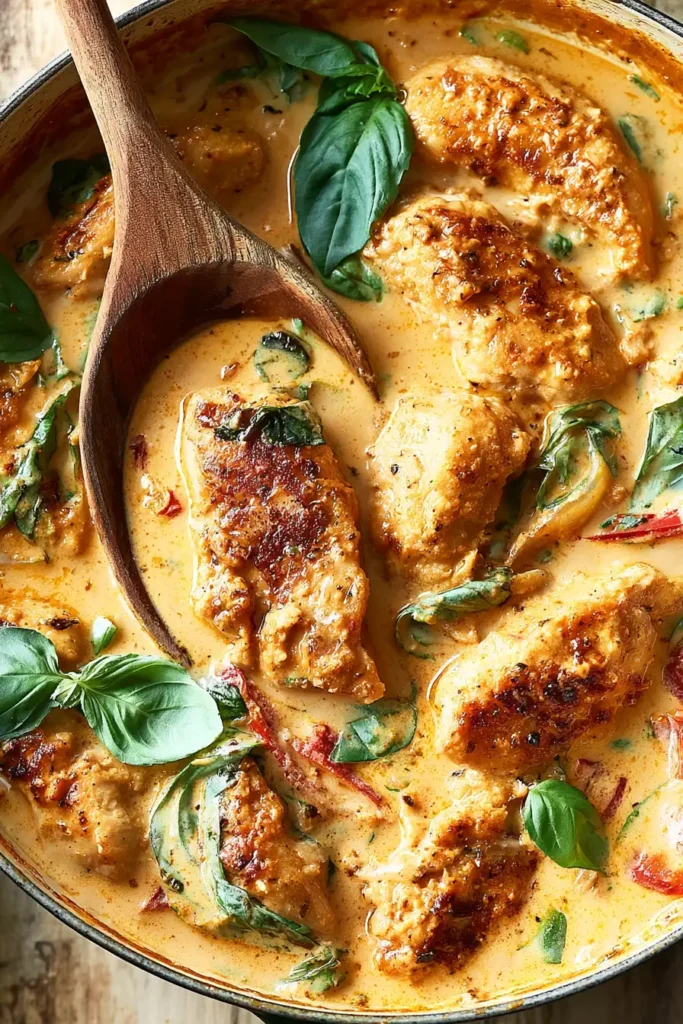
Coconut Basil Chicken is a flavorful, comforting dinner that brings together tender chicken, creamy coconut milk, fresh basil, and a bright touch of lime. The chicken is seasoned with paprika, turmeric, garlic, and black pepper before being simmered in a rich coconut sauce infused with shallots, fish sauce, honey, and chili crisp. Every bite delivers a delicious balance of savory, creamy, aromatic, and slightly spicy flavors.

What makes this dish especially appealing is how easily the ingredients come together in one pan. The coconut milk creates a silky sauce, while fresh basil adds a fragrant finish that makes the entire dish feel fresh and vibrant. A squeeze of lime cuts through the richness, and a little chili crisp brings gentle heat. Serve it over warm rice to soak up the flavorful sauce, and you have a satisfying meal that works beautifully for a weeknight dinner or a relaxed weekend meal.
Why You’ll Love This Coconut Basil Chicken Recipe
- Creamy and flavorful: Unsweetened coconut milk creates a smooth, rich sauce that coats every piece of chicken.
- Easy one-pan cooking: The chicken and sauce come together in one skillet, keeping preparation and cleanup manageable.
- A delicious balance of flavors: Garlic, turmeric, paprika, fish sauce, honey, lime, and chili crisp create layers of savory, sweet, tangy, and spicy notes.
- Fresh basil makes a difference: Adding basil at the end brings a fragrant, slightly peppery freshness to the creamy sauce.
- Easy to customize: Adjust the chili crisp to your preferred heat level or use Thai basil for a more distinctive aromatic flavor.
- Perfect for serving with rice: The creamy coconut sauce makes an excellent accompaniment to steamed rice, noodles, or your favorite simple side dishes.
Preparation and Tools
Before starting, prepare the ingredients so everything is ready when you need it. This recipe moves through several quick cooking stages, and having the garlic, shallot, seasonings, and sauce ingredients measured beforehand makes the process easier.
Essential equipment:
- Large skillet or sauté pan: Provides enough room to cook the chicken without overcrowding.
- Cutting board and sharp knife: For cutting chicken fillets, mincing garlic, and dicing the shallot.
- Measuring spoons: Help keep the seasoning and sauce proportions consistent.
- Small mixing bowl: Useful for combining the cornstarch with water before adding it to the sauce.
- Tongs or spatula: Make it easier to turn the chicken and stir the sauce.
- Citrus juicer: Helps extract the juice from the lime.
Prepare these ingredients first:
Pat the chicken tenders dry before seasoning. If using chicken fillets, cut them into evenly sized strips so they cook at a similar rate.
Mince the garlic cloves, dice the shallot, juice half the lime, and measure the coconut milk, fish sauce, honey, and chili crisp. Mix the cornstarch with the tablespoon of water until smooth to prepare the thickening mixture.
Wash the basil leaves and gently pat them dry. Keep them aside until the finishing stage so they retain their fresh aroma and color.
Preparation Tips for the Best Results
Choose the Right Chicken
Chicken tenders are convenient because they are already relatively uniform in size and cook quickly. Chicken fillets cut into strips work just as well. Try to keep the pieces similar in thickness so thinner strips do not become overcooked while thicker ones finish cooking.
Season the Chicken Evenly
Combine the salt, black pepper, sweet paprika, garlic powder, and ground turmeric before seasoning the chicken. This helps distribute the spices evenly over the surface.
The turmeric gives the chicken its warm golden color, while paprika adds mild sweetness and garlic powder reinforces the savory flavor.
Use Unsweetened Coconut Milk
Unsweetened canned coconut milk is essential for achieving the intended creamy, savory sauce. Avoid sweetened coconut milk beverages, which have a thinner consistency and a different flavor.
Shake the can well before opening if the coconut cream and liquid have separated.
Adjust the Chili Crisp Gradually
One teaspoon provides a little heat and extra savory depth without necessarily making the dish very spicy. If you enjoy stronger heat, you can add more to taste.
Different chili crisp brands vary in intensity, so start with the specified amount and adjust carefully.
Prepare the Cornstarch Slurry Properly
Mixing cornstarch with water before adding it to the coconut sauce prevents dry lumps from forming. Stir until completely smooth, then add it to the simmering sauce.
The sauce should become slightly thicker and cling to the chicken rather than remain watery.
Add Basil at the Right Time
Basil is best added near the end of cooking. Prolonged heating can darken the leaves and diminish their fresh fragrance.
Regular basil provides a sweet, aromatic finish, while Thai basil offers a more distinctive, slightly peppery flavor.
Ingredients for Coconut Basil Chicken
Each ingredient contributes something important to the creamy, aromatic sauce and well-seasoned chicken.
Chicken and Seasonings
- Chicken tenders: The main protein. Their shape makes them convenient for quick skillet cooking. Chicken fillets cut into strips are an equally suitable option.
- Avocado oil: Used to cook the chicken and aromatics. Its neutral flavor allows the spices and coconut sauce to stand out.
- Salt and black pepper: Provide the basic seasoning and balance the richness of the coconut milk.
- Sweet paprika: Adds mild warmth and a gentle peppery sweetness.
- Garlic powder: Builds savory flavor directly into the chicken seasoning.
- Ground turmeric: Contributes earthy flavor and a beautiful golden color.
Aromatics and Coconut Sauce
- Fresh garlic: Four minced cloves create a fragrant base for the sauce.
- Shallot: Adds a mild onion-like sweetness that complements the coconut milk.
- Chili crisp: Brings gentle heat and savory depth. Add more if you prefer a spicier sauce.
- Unsweetened coconut milk: The foundation of the creamy sauce, providing richness and a smooth texture.
- Fish sauce: Adds salty, savory depth and balances the natural sweetness of coconut milk. Low-sodium soy sauce can be used as the specified alternative.
- Honey: Provides a little sweetness to round out the savory and spicy flavors.
- Lime juice: Brightens the sauce and balances its richness.
- Cornstarch and water: Combined to create a slurry that thickens the sauce.
- Fresh basil: Adds a fragrant finishing touch. Thai basil can also be used for a more pronounced herbal aroma.
How to Make Coconut Basil Chicken
Step 1: Season the Chicken
Place the chicken tenders in a bowl or on a plate. Season them with salt, coarsely ground black pepper, sweet paprika, garlic powder, and ground turmeric.
Turn the pieces to coat them evenly on all sides. Make sure the seasoning is distributed across the surface rather than concentrated in one area.
The chicken should have a light golden-yellow appearance from the turmeric, with the paprika and black pepper adding extra color and flavor.
Step 2: Sear the Chicken
Heat the avocado oil in a large skillet over medium heat.
Once the oil is hot, arrange the seasoned chicken in the skillet in a single layer. Avoid overcrowding the pan, as this can prevent the chicken from browning properly. If necessary, cook in batches.
Cook the chicken until lightly golden on the outside and cooked through, turning as needed. The exact cooking time will depend on the thickness of the strips.
Transfer the cooked chicken to a plate and set it aside while preparing the sauce.
Step 3: Cook the Garlic and Shallot
Using the same skillet, add the minced garlic and diced shallot.
Stir and cook until fragrant and softened, allowing the aromatics to pick up the flavorful browned bits left from the chicken.
Be careful not to let the garlic burn, as this can give the finished sauce an unpleasant bitter taste.
Add the chili crisp and stir to combine it with the garlic and shallot. The mixture should become fragrant, with the chili crisp distributing its flavor throughout the aromatics.
Step 4: Make the Creamy Coconut Sauce
Pour the unsweetened coconut milk into the skillet. Add the fish sauce and honey, then stir everything together.
Allow the mixture to come to a gentle simmer, stirring occasionally so the ingredients combine evenly.
The coconut milk should become infused with the garlic, shallot, and chili crisp. Its creamy texture provides a rich base for the chicken.
Avoid letting the sauce boil aggressively. A gentle simmer is sufficient to bring the flavors together.
Step 5: Thicken the Sauce
In a small bowl, combine the cornstarch with the tablespoon of water. Stir until no dry lumps remain.
Slowly pour the slurry into the simmering coconut sauce while stirring continuously.
Continue cooking until the sauce thickens slightly and develops a smooth, creamy consistency. It should be thick enough to coat the back of a spoon while remaining easy to pour over the chicken.
Step 6: Return the Chicken to the Skillet
Add the cooked chicken back into the coconut sauce.
Turn the pieces gently so they become coated on all sides. Let everything simmer briefly until the chicken is heated through and the sauce has settled around it.
Taste the sauce and adjust the chili crisp if you want more heat.
Step 7: Finish with Lime and Fresh Basil
Remove the skillet from the heat or lower it to a gentle setting.
Stir in the juice from half a lime and add the fresh basil leaves. Gently fold the basil into the sauce until the leaves begin to soften and release their aroma.
The lime adds brightness, while the basil gives the finished dish its signature fresh fragrance.
Serve the Coconut Basil Chicken warm, making sure each portion includes plenty of the creamy coconut sauce.
Notes for the Best Coconut Basil Chicken
- Choose your basil: Regular sweet basil gives the sauce a mild, slightly sweet aroma. Thai basil has a stronger, more peppery flavor that works particularly well with coconut milk and fish sauce.
- Control the spice: One teaspoon of chili crisp provides a gentle kick. Add more gradually if you prefer a spicier dish.
- Keep the sauce creamy: Avoid boiling the coconut milk vigorously. A gentle simmer helps maintain a smooth consistency.
- Adjust the thickness: If the sauce becomes thicker than you prefer, you can loosen it with a small amount of additional liquid. Add gradually to maintain the desired consistency.
- Use fresh lime juice: Add the lime toward the end rather than cooking it for a long time. This preserves its bright citrus flavor.
- Cut chicken evenly: Uniform strips cook more consistently and are easier to coat with the coconut sauce.
Common Mistakes to Avoid
Overcrowding the Skillet
Adding too much chicken at once can cause the pieces to steam instead of sear. This prevents the light golden exterior that adds flavor to the finished dish.
How to avoid it: Arrange the chicken in a single layer, leaving a little space between the pieces. Cook in batches if your skillet is not large enough.
Burning the Garlic
Garlic cooks quickly and can become bitter if left over high heat for too long.
How to avoid it: Add the garlic and shallot after removing the chicken. Stir frequently and cook just until fragrant and softened before adding the coconut milk.
Using Sweetened Coconut Milk
Sweetened coconut milk beverages can make the sauce unexpectedly sweet and dilute its creamy texture.
How to avoid it: Use canned, unsweetened coconut milk as specified in the ingredients.
Adding Cornstarch Directly to the Sauce
Dry cornstarch can form unpleasant lumps when added directly to hot liquid.
How to avoid it: Always mix the cornstarch with water first. Stir until smooth, then gradually incorporate the slurry into the simmering sauce.
Overcooking the Chicken
Chicken strips are relatively quick to cook, and leaving them in the skillet for too long can make them dry.
How to avoid it: Cook the chicken until it reaches an internal temperature of 165°F (74°C). Once cooked, set it aside while preparing the sauce and return it to the skillet near the end.
Cooking the Basil for Too Long
Basil loses its fresh aroma and bright appearance when exposed to prolonged heat.
How to avoid it: Add the leaves during the final stage of cooking, allowing the residual heat to soften them gently.
What to Serve With Coconut Basil Chicken
The creamy coconut sauce is one of the best parts of this dish, so choose sides that complement its richness without overpowering the fresh basil and lime.
1. Steamed Jasmine Rice
Jasmine rice is an excellent pairing because its delicate fragrance complements the coconut sauce. Its fluffy texture also absorbs the creamy liquid, making every bite satisfying.
2. Coconut Rice
For an extra-rich meal, serve the chicken with coconut rice. The subtle coconut flavor ties the entire plate together without requiring complicated side dishes.
3. Fresh Cucumber Salad
A crisp cucumber salad with a light lime dressing provides a refreshing contrast to the warm, creamy chicken. The cool vegetables help balance the richness of the sauce.
4. Garlic Green Beans
Lightly cooked green beans with garlic add color, freshness, and a pleasant crunch. They also provide a simple vegetable side that complements the savory sauce.
5. Rice Noodles
Soft rice noodles are another delicious option. They absorb the coconut sauce nicely and turn the chicken into a satisfying noodle bowl.
6. Steamed Vegetables
Broccoli, carrots, or snap peas make convenient accompaniments. Their natural sweetness and fresh texture work well with the savory coconut sauce.
Storage Instructions
Proper storage helps maintain the flavor and texture of leftover Coconut Basil Chicken.
Refrigerating
Allow the chicken and sauce to cool slightly before transferring them into an airtight food storage container. Refrigerate within two hours of cooking.
Store leftovers in the refrigerator for up to 3–4 days. Keeping the chicken coated in its sauce helps prevent it from drying out.
Freezing
You can freeze Coconut Basil Chicken, although coconut-based sauces may change texture slightly after thawing.
Transfer completely cooled portions into freezer-safe airtight containers. Leave a little room for expansion and freeze for up to 2 months for best quality.
For the best texture, thaw overnight in the refrigerator before reheating. Stir the sauce well as it warms to help bring it back together.
Reheating
For stovetop reheating, place the chicken and sauce in a skillet over low to medium-low heat. Stir occasionally until thoroughly heated.
If the sauce has thickened in the refrigerator, add a small splash of water to loosen it. Avoid overheating, as this can dry out the chicken and cause the sauce to separate.
You can also reheat individual portions in the microwave. Use a microwave-safe dish, cover loosely, and heat in short intervals, stirring between intervals until evenly hot.
Make-Ahead Preparation
To save time, you can cut the chicken, prepare the seasonings, mince the garlic, and dice the shallot ahead of time. Store the prepared ingredients separately in the refrigerator.
The coconut sauce is best enjoyed freshly prepared with the basil added at the end. If making the complete dish ahead, refrigerate it promptly and add a little liquid when reheating if necessary.
Estimated Nutrition Information
The following nutritional values are approximate estimates based on the listed ingredients and an assumed yield of 4 servings. Actual values will vary depending on the coconut milk brand, chicken portions, and fish sauce or soy sauce used.
| Nutrient | Estimated Amount Per Serving |
|---|---|
| Calories | 470 kcal |
| Protein | 43 g |
| Carbohydrates | 10 g |
| Fat | 28 g |
| Saturated Fat | 19 g |
| Fiber | 1 g |
| Sugar | 4 g |
| Sodium | 1,050 mg |
These estimates do not include rice or additional side dishes.
Frequently Asked Questions
Can I use chicken breasts instead of chicken tenders?
Yes. Boneless, skinless chicken breasts work well in this recipe. Cut them into evenly sized strips so they cook consistently. Follow the same seasoning and skillet method, checking that the thickest pieces reach an internal temperature of 165°F (74°C).
Can I use Thai basil instead of regular basil?
Absolutely. Thai basil is an excellent alternative and provides a more pronounced, slightly peppery, anise-like aroma. The recipe calls for 1 cup of regular basil or ½ cup of Thai basil, so follow the corresponding quantity.
Is Coconut Basil Chicken spicy?
The recipe has a mild kick from the chili crisp. The actual heat depends on the brand you use. For a milder sauce, use the specified teaspoon without adding more. If you enjoy stronger heat, increase the chili crisp gradually.
Can I substitute soy sauce for fish sauce?
Yes. The recipe allows low-sodium soy sauce as an alternative to fish sauce. It provides savory seasoning, although the flavor will be slightly different. Use the same specified quantity.
Why is my coconut sauce too thin?
The sauce may need additional simmering time or the cornstarch slurry may not have been incorporated evenly. Make sure the cornstarch is completely dissolved in water before adding it. Stir the sauce as it simmers until it reaches a creamy consistency.
Can I make this recipe without chili crisp?
The chili crisp contributes heat and savory flavor. If you prefer a milder dish, you can reduce the amount or leave it out. The garlic, shallot, coconut milk, fish sauce, and basil will still provide plenty of flavor.
Conclusion
Coconut Basil Chicken is a delicious way to bring creamy coconut flavor and fresh herbs into your everyday dinner routine. Tender seasoned chicken, fragrant garlic, a silky coconut sauce, and fresh lime create a satisfying combination that is easy to serve with rice or noodles. Keep this recipe handy whenever you want a comforting skillet meal with a little sweetness, gentle heat, and plenty of fresh basil flavor.
Print
Coconut Basil Chicken in Creamy Coconut Sauce
- Total Time: 30 minutes
- Yield: 4 servings 1x
- Diet: Gluten Free
Description
This Coconut Basil Chicken features tender seasoned chicken simmered in a creamy coconut milk sauce with garlic, shallots, chili crisp, fresh basil, and a bright squeeze of lime. An easy, flavorful skillet dinner perfect served over rice.
Ingredients
- 1 tbsp avocado oil
- 1.1 pounds chicken tenders (or chicken fillets cut into strips)
- 1 tsp salt
- 1 tsp coarsely ground black pepper
- 1 tsp sweet paprika
- 1 tsp garlic powder
- 1 tsp ground turmeric
- 4 garlic cloves (minced)
- 1 shallot (diced)
- 1 tsp chili crisp (more to taste)
- 1 can (14 oz/400 ml) unsweetened coconut milk
- 2 tbsp fish sauce (or low sodium soy sauce)
- 1 tbsp water
- 2 tsp cornstarch
- 2 tsp honey
- ½ lime (juiced)
- 1 cup basil leaves (or ½ cup Thai basil)
Instructions
- Season the chicken tenders with salt, coarsely ground black pepper, sweet paprika, garlic powder, and ground turmeric. Toss to coat evenly.
- Heat the avocado oil in a large skillet over medium heat. Add the chicken in a single layer, working in batches if necessary. Cook until golden and cooked through, turning as needed. Transfer to a plate.
- In the same skillet, add the minced garlic and diced shallot. Cook, stirring, until fragrant and softened. Add the chili crisp and stir to combine.
- Pour in the unsweetened coconut milk. Add the fish sauce and honey, then stir. Bring the mixture to a gentle simmer.
- In a small bowl, combine the cornstarch and water until smooth. Gradually stir the mixture into the simmering coconut sauce.
- Continue cooking and stirring until the sauce thickens slightly and becomes creamy.
- Return the cooked chicken to the skillet. Stir gently to coat the pieces with the sauce and simmer briefly until heated through.
- Add the lime juice and fresh basil leaves. Gently stir to combine, allowing the basil to soften. Serve warm.
Notes
- Use Thai basil for a stronger, slightly peppery herbal flavor.
- Adjust the chili crisp according to your preferred spice level.
- Store leftovers in an airtight container in the refrigerator for 3–4 days.
- Prep Time: 10 minutes
- Cook Time: 20 minutes
- Category: Recipes
- Method: Stovetop
- Cuisine: Asian-Inspired
Nutrition
- Serving Size: 1/4
- Calories: 470 kcal
- Sugar: 4 g
- Sodium: 1,050 mg
- Fat: 28 g
- Saturated Fat: 19 g
- Unsaturated Fat: 9 g
- Trans Fat: 0 g
- Carbohydrates: 10 g
- Fiber: 1 g
- Protein: 43 g
- Cholesterol: 110 mg
Keywords: Coconut Basil Chicken, creamy coconut chicken, basil chicken recipe, coconut milk chicken, easy chicken skillet dinner

Leave a Comment