
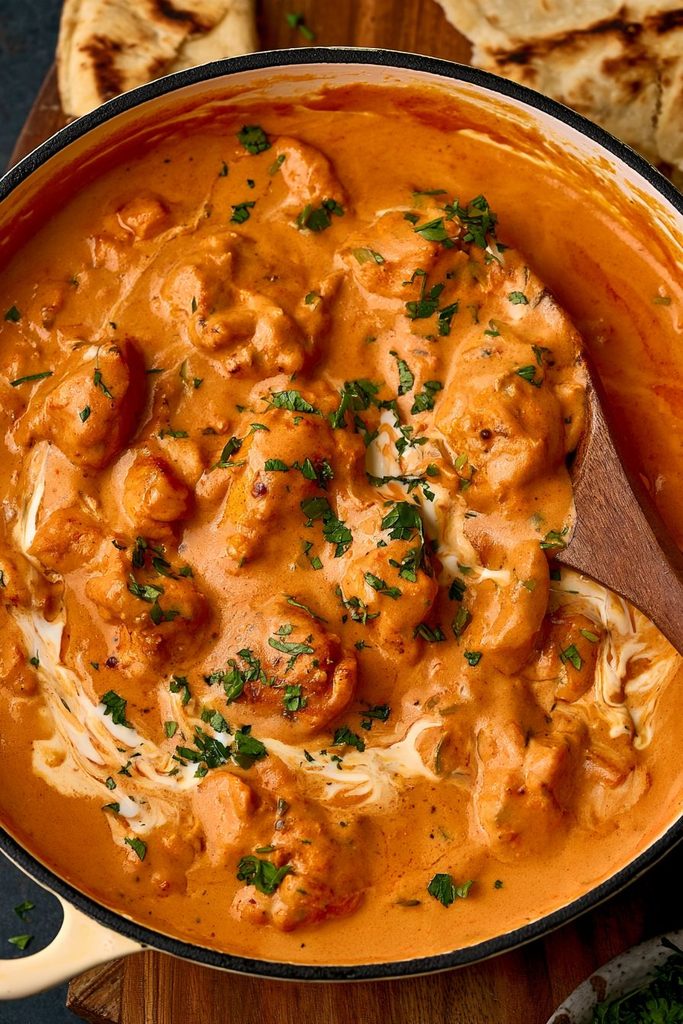
Butter chicken is a rich, comforting Indian curry made with tender marinated chicken simmered in a smooth tomato sauce enriched with butter, cream, and aromatic spices. The sauce has a beautiful balance of savory, tangy, mildly sweet, and creamy flavors, while ginger, garlic, garam masala, cumin, and coriander give every bite its signature warmth.

This easy butter chicken recipe brings those familiar restaurant-style flavors into your home kitchen without requiring complicated techniques. The chicken is coated in a yogurt-based marinade, then cooked and combined with a velvety sauce made from tomatoes, cashews, cream, and butter. Serve it with warm naan or fluffy basmati rice to soak up every last spoonful of sauce.
Why You’ll Love This Butter Chicken Recipe
- Creamy, flavorful sauce: Tomato puree, blended cashews, heavy cream, and butter create a smooth, luxurious consistency with plenty of flavor.
- Tender, spice-marinated chicken: Yogurt, lemon juice, ginger, garlic, and warm spices help flavor the chicken before it goes into the sauce.
- Easy to customize: Use chicken thighs or breasts, adjust the Kashmiri chili powder to your preferred heat level, and choose cashews or cream for the sauce.
- Made with familiar ingredients: Most of the ingredients are pantry staples or easy to find at a regular grocery store.
- Perfect for serving with rice or naan: The generous sauce makes this curry ideal for scooping up with bread or spooning over rice.
Preparation and Tools
You will need a large mixing bowl for the chicken marinade, a sharp knife and cutting board for chopping the onions and aromatics, and a blender for preparing the smooth cashew mixture. A large, heavy-bottomed skillet or deep pan is ideal for cooking the chicken and sauce.
Before you begin, cut the chicken into evenly sized, bite-sized pieces. Finely chop the onions, mince the garlic, grate the ginger, and prepare the spices so everything is ready when you start cooking.
If you are using cashews, soak them before blending until they can be processed into a smooth paste. This helps them incorporate more easily into the tomato sauce.
Preparation Tips for the Best Butter Chicken
Give the marinade enough time. The yogurt, lemon juice, ginger, garlic, and spices need time to coat the chicken and develop flavor. If your schedule allows, marinate the chicken for at least 30 minutes. You can also prepare it ahead and refrigerate it until you are ready to cook.
Choose your chicken according to your preference. Chicken thighs tend to remain juicy and forgiving during cooking, while chicken breasts offer a leaner option. Whichever you choose, cut the pieces evenly so they cook at a similar rate.
Adjust the chili powder carefully. Kashmiri chili powder contributes a rich red color and gentle warmth. Paprika is a convenient alternative, particularly if you prefer a milder curry. Check the heat of your chosen powder before adding extra.
Blend the cashews thoroughly. A smooth cashew paste helps produce the creamy consistency associated with butter chicken. Blend with enough water to create a smooth mixture if needed, but avoid adding so much that the sauce becomes watery.
Let the spices cook with the onions. Adding the sauce spices after the onions have softened allows their aromas to develop in the butter and oil. Stir regularly to prevent the garlic, ginger, or ground spices from burning.
Add the cream toward the end. Heavy cream helps soften the acidity of the tomatoes and rounds out the spices. Stir it in after the tomato base has cooked, then keep the sauce at a gentle simmer rather than letting it boil aggressively.
Ingredients for Butter Chicken
This recipe has three main components: the yogurt marinade, the buttery tomato sauce, and the finishing garnishes. Each contributes something important to the final dish.
Chicken and Marinade
- Chicken thighs or breasts: Two pounds of bite-sized chicken form the hearty base of the curry. Thighs offer a particularly juicy texture, while breasts work well if you prefer leaner meat.
- Plain yogurt: Three-quarters of a cup of Greek yogurt or hung curd coats the chicken and helps the marinade cling to each piece.
- Lemon juice: The juice of one lemon adds brightness and balances the richness of the finished sauce.
- Ginger and garlic: Half a tablespoon of grated ginger and half a tablespoon of grated garlic provide the aromatic foundation of the marinade.
- Garam masala: Half a tablespoon brings a warm, fragrant blend of spices.
- Ground cumin and coriander: One teaspoon of each adds earthy, savory depth.
- Kashmiri chili powder or paprika: One teaspoon adds color and adjustable warmth.
- Ground turmeric: Half a teaspoon contributes an earthy flavor and golden undertone.
- Salt: One teaspoon seasons the chicken throughout the marinating process.
Creamy Tomato Butter Sauce
- Butter: Three tablespoons, divided, supply richness and the buttery character of the curry.
- Olive oil or ghee: Two tablespoons help cook the onions and aromatics. Ghee is a particularly fitting choice for an Indian-inspired curry.
- Onions: Two medium onions, finely chopped, form the savory base of the sauce.
- Garlic and ginger: Three minced garlic cloves and one tablespoon of grated ginger deepen the flavor.
- Kashmiri chili powder or paprika: One teaspoon adds color and a gentle spicy note.
- Ground cumin, coriander, and garam masala: One teaspoon of each reinforces the warm spice profile.
- Kasuri methi: Half a tablespoon of crushed dried fenugreek leaves is optional but adds a distinctive, slightly earthy aroma.
- Tomato puree or passata: One 14-ounce can provides the tangy tomato base. Alternatively, use four to five ripe tomatoes, blended.
- Blended cashews or cream: Half a cup of soaked cashews blended until smooth adds body and a subtle nutty richness. For a nut-free option, the supplied alternative is a quarter cup of cream.
- Heavy cream: One cup creates the signature creamy finish.
- Sugar or honey: One tablespoon balances the tomato acidity.
- Salt: One teaspoon, adjusted to taste, seasons the sauce.
Garnish
Fresh cilantro leaves add a fresh herbal finish, while an extra drizzle of cream makes the curry look inviting and adds another touch of richness.
How to Make Butter Chicken
Step 1: Marinate the Chicken
Place the bite-sized chicken pieces in a large mixing bowl. Add the yogurt, lemon juice, grated ginger, grated garlic, garam masala, ground cumin, ground coriander, Kashmiri chili powder or paprika, turmeric, and salt.
Mix thoroughly until every piece of chicken is coated in the marinade. Cover the bowl and refrigerate for at least 30 minutes if time allows.
Before cooking, give the chicken another stir to redistribute the marinade. Keep the chicken refrigerated while it marinates, and avoid leaving it at room temperature for an extended period.
Step 2: Cook the Marinated Chicken
Heat a large skillet over medium-high heat and add a little of the prepared cooking fat if needed to prevent sticking. Cook the marinated chicken in batches if necessary, allowing space between the pieces so they brown rather than steam.
Turn the chicken as it cooks, allowing the surfaces to develop some color. The exact cooking time depends on the size of the pieces and whether you use thighs or breasts.
The chicken does not need to develop a thick crust, but a little browning adds flavor. Transfer the cooked chicken to a clean plate while you prepare the sauce. Ensure it reaches an internal temperature of 165°F (74°C) before serving; if it is not fully cooked at this stage, it can finish cooking in the sauce.
Step 3: Soften the Onions
Reduce the heat to medium and add the olive oil or ghee to the skillet, along with the butter. Add the finely chopped onions and cook, stirring regularly, until they soften and begin to turn lightly golden.
This step establishes the savory foundation of the sauce. Take the time to soften the onions evenly rather than rushing them over very high heat, as browned or burnt pieces can affect the flavor of the finished curry.
If the pan has flavorful browned bits from cooking the chicken, stir them into the onions as they soften.
Step 4: Add the Ginger, Garlic, and Spices
Stir in the minced garlic and grated ginger. Cook briefly until fragrant, stirring frequently so the aromatics do not burn.
Add the Kashmiri chili powder or paprika, ground cumin, ground coriander, and garam masala. Stir to coat the onions in the spices and allow their aromas to develop.
If using kasuri methi, crush the dried fenugreek leaves between your fingers and add them to the pan. This optional ingredient gives the sauce an extra layer of flavor that pairs especially well with the tomato and cream.
Step 5: Build the Tomato Sauce
Pour the tomato puree or passata into the skillet and stir well, scraping up any flavorful bits from the bottom of the pan.
Let the tomato mixture simmer gently, stirring occasionally, until it thickens and its raw tomato aroma softens. The sauce should look richer and more cohesive rather than thin and watery.
Add the smooth blended cashews and stir until fully incorporated. If you are using the nut-free cream alternative instead, reserve it for incorporation into the sauce without the cashew paste.
Continue cooking gently until the tomato base and creamy ingredient are combined into a smooth sauce.
Step 6: Finish the Butter Chicken Sauce
Stir the heavy cream into the tomato mixture, followed by the sugar or honey and salt. Add the remaining butter, allowing it to melt into the sauce as you stir.
Reduce the heat to low and let the sauce simmer gently until it becomes smooth, creamy, and evenly colored. Taste and adjust the salt if needed. The sugar or honey should balance the tomatoes rather than make the curry noticeably sweet.
If the sauce seems too thick, loosen it with a small splash of water. If it is thinner than you prefer, allow it to simmer gently for a little longer, stirring regularly to prevent sticking.
Step 7: Return the Chicken to the Sauce
Add the cooked chicken and any accumulated juices back into the skillet. Stir gently to coat every piece with the creamy tomato sauce.
Let everything simmer together for several minutes so the chicken absorbs some of the sauce’s flavor. If the chicken was not fully cooked during the initial cooking stage, continue simmering until it reaches an internal temperature of 165°F (74°C).
Avoid boiling the sauce vigorously after adding the cream. A gentle simmer helps maintain its smooth consistency while allowing the flavors to come together.
Step 8: Garnish and Serve
Remove the skillet from the heat and scatter fresh cilantro leaves over the butter chicken. Finish with a drizzle of extra cream if desired.
Serve immediately with basmati rice, warm naan, or another bread that can soak up the sauce. A simple vegetable side dish adds freshness and balances the richness of the curry.
Recipe Notes and Variations
- For a milder curry: Use paprika instead of Kashmiri chili powder and avoid adding extra chili. The garam masala and other spices will still provide plenty of flavor.
- For a nut-free version: Replace the half cup of blended cashews with the specified quarter cup of cream. The sauce will still be creamy, although its thickness and flavor may differ slightly.
- For extra flavor: Add the optional kasuri methi. Crush it between your fingers before stirring it into the sauce to release its aroma.
- For a smoother sauce: If you prefer a completely silky texture, blend the cooked tomato and onion base before returning it to the pan. Take care when blending hot liquids, and follow your blender’s instructions for safe use.
- For meal preparation: Marinate the chicken ahead of time and refrigerate it until cooking. You can also prepare the sauce in advance and combine it with freshly cooked chicken when needed.
Common Mistakes to Avoid
Rushing the Marinade
The marinade needs time to coat the chicken and develop flavor. Cooking immediately after mixing will still work, but allowing at least 30 minutes in the refrigerator gives the ingredients more time to flavor the meat.
Overcrowding the Pan
Adding all the chicken at once to a crowded skillet can cause it to release moisture and steam instead of browning. Cook in batches when necessary, leaving space between the pieces.
Burning the Aromatics
Garlic, ginger, and ground spices can turn bitter if they cook for too long over high heat. Once the onions have softened, lower the heat as needed and stir the aromatics and spices frequently.
Adding Cream Before the Tomato Base Has Cooked
Cream softens the acidity of the tomatoes, but it should not be used to cover up an undercooked tomato base. Let the tomatoes simmer until their raw aroma diminishes before adding the cream.
Making the Sauce Too Thin
The blended cashews help thicken the sauce, while the tomato mixture also reduces as it simmers. Add any extra liquid gradually rather than pouring in a large amount at once. If necessary, let the sauce simmer gently until it reaches your preferred consistency.
Forgetting to Taste Before Serving
The final balance depends on the tomatoes, cream, chili powder, and salt you use. Taste the sauce after adding the cream and butter, then adjust the seasoning gradually. The finished curry should be creamy and savory, with gentle sweetness and enough spice to keep the flavor lively.
What to Serve With Butter Chicken
Butter chicken has a rich, creamy sauce, so it pairs especially well with rice, bread, and fresh sides that balance its texture.
- Basmati rice: Fluffy, fragrant rice is a classic accompaniment. Its light texture lets the buttery tomato sauce take center stage.
- Garlic naan: Soft naan is ideal for scooping up the sauce. Plain naan works just as well if you prefer a less pronounced garlic flavor.
- Jeera rice: Basmati rice cooked with cumin offers an aromatic alternative to plain rice and complements the spices in the curry.
- Cucumber raita: A cooling yogurt side with cucumber provides a refreshing contrast to the warm spices and creamy sauce.
- Kachumber salad: A simple salad of chopped cucumber, tomato, and onion adds freshness and a crisp texture.
- Roasted vegetables: Roasted cauliflower or green beans provide a savory vegetable side without competing with the main dish.
For an easy, complete meal, serve the curry with basmati rice, warm naan, and a small cucumber salad.
Storage Instructions
Refrigerating Leftovers
Allow leftover butter chicken to cool slightly, then transfer it to an airtight container and refrigerate within two hours of cooking. Keep it refrigerated at 40°F (4°C) or below and use it within three to four days.
Store the curry with its sauce rather than separating the chicken. This helps the pieces remain moist and makes reheating more convenient.
Reheating Butter Chicken
For stovetop reheating, transfer the desired portion to a saucepan and warm it over low to medium-low heat, stirring occasionally. Add a small splash of water if the sauce has thickened in the refrigerator.
Heat until the chicken reaches 165°F (74°C). Avoid prolonged boiling, which can affect the texture of the chicken and the smoothness of the creamy sauce.
You can also reheat an individual portion in the microwave in a microwave-safe container. Cover loosely, heat in short intervals, and stir between intervals to distribute the heat evenly.
Can You Freeze Butter Chicken?
Yes, butter chicken can be frozen, although the cream-based sauce may change texture slightly after thawing. Transfer cooled curry to a freezer-safe airtight container, leaving a little room for expansion, and freeze for up to three months for best quality.
Thaw overnight in the refrigerator and reheat gently on the stovetop, stirring frequently. If the sauce looks separated, stir it thoroughly as it warms. A small splash of water or cream can help restore a smoother consistency.
Make-Ahead Tips
You can prepare the marinade in advance and refrigerate the chicken until you are ready to cook it. The sauce can also be made ahead and refrigerated separately, then reheated while you cook the chicken.
For the freshest texture, combine the chicken and sauce shortly before serving. If preparing the entire curry in advance, cool and store it promptly, then reheat it thoroughly before serving.
Estimated Nutrition
The following figures are approximate estimates for one serving, assuming the recipe makes six servings and uses chicken, cashews, heavy cream, butter, and the other listed ingredients. Actual nutrition will vary depending on the cut of chicken, the type of yogurt, the exact products used, and the amount of sauce served.
| Nutrient | Estimated amount per serving |
|---|---|
| Calories | 650 kcal |
| Protein | 43 g |
| Carbohydrates | 21 g |
| Fat | 43 g |
| Saturated fat | 21 g |
| Cholesterol | 195 mg |
| Fiber | 3 g |
| Sugar | 11 g |
| Sodium | 950 mg |
| Potassium | 850 mg |
| Vitamin A | 1,200 IU |
| Vitamin C | 15 mg |
| Calcium | 120 mg |
| Iron | 3 mg |
These values are estimates, not laboratory-verified nutrition information. The actual amounts depend on ingredient brands, portion sizes, and preparation choices. Rice, naan, and other accompaniments are not included.
Frequently Asked Questions
Is butter chicken spicy?
Butter chicken is generally known for its warm spices and creamy sauce rather than intense heat. The Kashmiri chili powder contributes color and mild warmth, while paprika offers a milder alternative. Adjust the chili according to your preference.
Can I use chicken breasts instead of thighs?
Yes. Both chicken thighs and breasts work well. Cut the chicken into evenly sized pieces and avoid overcooking it, particularly if using breasts, which can dry out more quickly than thighs.
What makes butter chicken creamy?
The creaminess comes from several ingredients working together: butter adds richness, heavy cream creates a smooth finish, and blended cashews help thicken the tomato sauce. For the specified nut-free alternative, use a quarter cup of cream instead of the cashews.
Can I make butter chicken without kasuri methi?
Yes. Kasuri methi is optional in this recipe. Leaving it out will not prevent the curry from coming together, although the sauce will lack some of the distinctive aroma that dried fenugreek leaves contribute.
Why does my butter chicken sauce taste too acidic?
Tomatoes vary in acidity, so some sauces taste sharper than others. The tablespoon of sugar or honey in this recipe helps balance the tomatoes. Taste the finished sauce and adjust gradually rather than adding extra sweetener all at once.
Can I make butter chicken ahead for guests?
Yes. Prepare the curry ahead, refrigerate it promptly, and reheat it gently before serving. Keep a little water or cream available to loosen the sauce if it thickens during storage. Add the fresh cilantro and cream drizzle just before serving for an attractive finish.
A Creamy Curry Worth Making at Home
This butter chicken combines tender, spice-marinated chicken with a rich tomato sauce, aromatic seasonings, and a creamy finish. Serve it with basmati rice or warm naan for a satisfying dinner, and keep any leftovers for an easy meal later in the week.
With a little preparation and gentle simmering, this approachable recipe brings the comforting flavors of butter chicken to your own kitchen.
Print
Butter Chicken (Restaurant-Style, Easy + Creamy)
- Total Time: 1 hour 15 minutes
- Yield: 6 servings 1x
Description
This easy butter chicken recipe features tender yogurt-marinated chicken simmered in a rich, creamy tomato sauce with butter, ginger, garlic, and warming Indian spices. Blended cashews add body, while heavy cream creates a smooth, velvety finish. Serve with basmati rice or warm naan for a comforting homemade Indian-inspired dinner.
Ingredients
For the Marinade
- 2 pounds chicken thighs or breasts, cut into bite-sized pieces
- ¾ cup plain yogurt, Greek or hung curd
- 1 lemon, juiced
- ½ tablespoon grated ginger
- ½ tablespoon grated garlic
- ½ tablespoon garam masala
- 1 teaspoon ground cumin
- 1 teaspoon ground coriander
- 1 teaspoon Kashmiri chili powder or paprika, adjust for heat
- ½ teaspoon ground turmeric powder
- 1 teaspoon salt
For the Sauce
- 3 tablespoons butter, divided
- 2 tablespoons olive oil or ghee
- 2 medium onions, finely chopped
- 3 cloves garlic, minced
- 1 tablespoon grated ginger
- 1 teaspoon Kashmiri chili powder or paprika
- 1 teaspoon ground cumin
- 1 teaspoon ground coriander
- 1 teaspoon garam masala
- ½ tablespoon kasuri methi (dried fenugreek leaves), crushed (optional)
- 1 can tomato puree (14 ounces) or passata, or 4–5 ripe tomatoes, blended
- ½ cup cashews, soaked and blended smooth (or ¼ cup cream for nut-free)
- 1 cup heavy cream
- 1 tablespoon sugar or honey
- 1 teaspoon salt, adjust to taste
For Garnish
- Fresh cilantro leaves
- Extra cream drizzle
Instructions
- Marinate the chicken: In a large bowl, combine the chicken, yogurt, lemon juice, grated ginger, grated garlic, garam masala, cumin, coriander, Kashmiri chili powder or paprika, turmeric, and salt. Mix until the chicken is evenly coated. Cover and refrigerate for at least 30 minutes if time allows.
- Cook the chicken: Heat a large skillet over medium-high heat. Cook the marinated chicken in batches if necessary, allowing the pieces to brown lightly without overcrowding the pan. Transfer to a clean plate. If the chicken is not fully cooked at this stage, it will finish cooking in the sauce.
- Soften the onions: Reduce the heat to medium. Add the olive oil or ghee and butter to the skillet. Add the chopped onions and cook, stirring regularly, until softened and lightly golden.
- Add the aromatics and spices: Stir in the minced garlic and grated ginger. Cook briefly until fragrant. Add the Kashmiri chili powder or paprika, cumin, coriander, and garam masala. Stir well. If using kasuri methi, crush the dried leaves between your fingers and add them to the pan.
- Prepare the tomato base: Pour in the tomato puree or passata and stir, scraping up any flavorful browned bits from the pan. Simmer gently until the sauce thickens and the raw tomato aroma softens.
- Add the cashews: Stir in the soaked cashews blended until smooth. If using the nut-free alternative, use the specified ¼ cup of cream instead of the cashew paste.
- Make the sauce creamy: Stir in the heavy cream, sugar or honey, and salt. Add the remaining butter and allow it to melt into the sauce. Simmer gently until the sauce is smooth and creamy. If it becomes too thick, add a small splash of water.
- Combine the chicken and sauce: Return the chicken and any accumulated juices to the skillet. Stir to coat every piece in the sauce. Simmer gently for several minutes until the chicken is fully cooked and reaches an internal temperature of 165°F (74°C).
- Garnish and serve: Remove from the heat. Garnish with fresh cilantro leaves and a drizzle of extra cream, if desired. Serve hot with basmati rice or warm naan.
Notes
- For a milder curry, use paprika instead of Kashmiri chili powder and adjust the seasoning to taste.
- Chicken thighs tend to remain juicier, while chicken breasts are a leaner alternative. Cook until the chicken reaches 165°F (74°C).
- For a nut-free version, replace the blended cashews with the specified ¼ cup of cream. Kasuri methi is optional but adds a distinctive aroma.
- Prep Time: 40 minutes
- Cook Time: 35 minutes
- Category: Recipes
- Method: Stovetop
- Cuisine: Indian
Nutrition
- Serving Size: 6 servings
- Calories: 650 kcal
Keywords: butter chicken, easy butter chicken recipe, creamy butter chicken, Indian butter chicken, restaurant-style butter chicken, chicken tikka masala alternative
Leave a Comment