
Creamy Tuscan shrimp linguine is a delicious pasta dish that brings together juicy shrimp, tender linguine, sun-dried tomatoes, fresh spinach, and a rich, creamy garlic sauce. Every bite combines the sweetness of the shrimp with the savory flavor of garlic, the tangy notes of sun-dried tomatoes, and a bright hint of lemon. It is the kind of meal that feels special enough for a dinner with guests but is just as enjoyable on an ordinary weeknight.
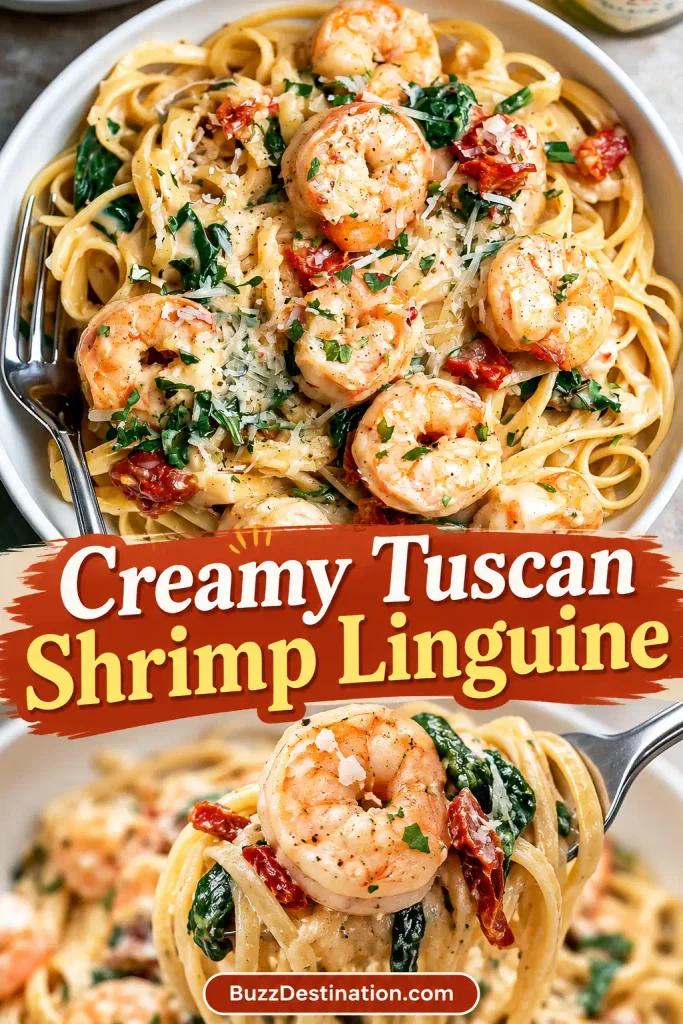
What makes this dish particularly appealing is the balance of flavors and textures. The cream creates a silky sauce that coats the linguine, while the spinach adds freshness and the sun-dried tomatoes bring concentrated sweetness. Fresh parsley and lemon zest finish everything with a light, fragrant touch that keeps the sauce from feeling too heavy. With shrimp, pasta, and a handful of flavorful ingredients, this creamy Tuscan shrimp linguine is a satisfying dinner that looks beautiful on the plate without requiring complicated preparation.
Why You’ll Love This Recipe
- Rich and creamy sauce: Single or pouring cream creates a smooth, velvety coating for the linguine, bringing the garlic, tomatoes, and shrimp together in every forkful.
- Juicy, flavorful shrimp: Seasoning the shrimp with salt, garlic granules, and black pepper gives them a savory foundation that complements the creamy sauce.
- A delicious combination of ingredients: Sun-dried tomatoes, baby spinach, shallot, garlic, and lemon create layers of flavor, from sweet and savory to fresh and slightly tangy.
- A satisfying pasta dinner: Linguine provides plenty of surface area for the sauce to cling to, making each serving flavorful and filling.
- Fresh finishing touches: Lemon zest and chopped parsley brighten the finished dish and complement the richness of the cream.
- Suitable for different occasions: Serve it as a comforting family dinner or plate it up for a relaxed dinner with friends.
Preparation and Tools
Before cooking, peel and devein the raw shrimp if they are not already prepared. Pat them dry with paper towels so excess moisture does not interfere with browning. Combine the salt, garlic granules, and ground black pepper with the shrimp, distributing the seasoning evenly.
Finely mince the garlic cloves and dice the shallot. Chop the sun-dried tomatoes and parsley, wash the baby spinach if needed, and zest the lemon. Having these ingredients ready is particularly useful because the garlic and shallot cook quickly, and you will want to add the remaining ingredients without rushing.
Cook the dried linguine until al dente according to the package instructions. The pasta should be tender but retain a slight bite in the center. Drain it when ready, keeping in mind that the pasta will be combined with the sauce shortly afterward.
You will need:
- A large pot for cooking the linguine
- A large frying pan or deep skillet for the shrimp and sauce
- A colander for draining the pasta
- A sharp knife and cutting board
- A garlic press or knife for preparing the garlic
- Measuring spoons, a measuring cup, and a zester
A wide skillet is especially helpful because it gives the shrimp room to cook and provides enough space to combine the pasta with the sauce without making a mess.
Preparation Tips for the Best Results
Prepare the shrimp carefully. If using frozen shrimp, thaw them completely before cooking and remove excess moisture. Dry shrimp are easier to cook evenly, and they will not release as much water into the pan.
Avoid overcooking the shrimp. Shrimp cook quickly and can become firm or rubbery if left on the heat too long. Watch for them to turn opaque and pink, adjusting the cooking time according to their size.
Keep the garlic fragrant, not burnt. Minced garlic can darken quickly in hot oil. Stir it regularly and pay attention to its aroma. Garlic should smell fragrant rather than bitter before you proceed with the sauce.
Chop the sun-dried tomatoes into manageable pieces. Smaller pieces distribute their concentrated flavor throughout the linguine, allowing you to enjoy them in different parts of the dish instead of getting large, uneven mouthfuls.
Use lemon zest for freshness. The zest supplies fragrant citrus oils without adding much liquid to the sauce. Zest the lemon before cutting or juicing it, and avoid grating too deeply into the bitter white pith.
Time the pasta and sauce together. Ideally, the linguine should finish cooking close to the time the sauce is ready. This helps you combine everything while warm, allowing the pasta to become evenly coated.
Ingredients for Creamy Tuscan Shrimp Linguine
Each ingredient contributes something important to the finished dish, from the savory base to the creamy texture and fresh finish.
Shrimp
One pound (450 g) of raw, peeled, and deveined shrimp provides the main protein. The shrimp absorb the seasoning and pair naturally with garlic, cream, and lemon. Medium or large shrimp are convenient to handle, although cooking time will depend on their size.
Linguine
The recipe uses 10½ ounces (300 g) of dried linguine, cooked until al dente. Its long, flat shape works well with creamy sauces because the sauce coats the strands rather than slipping away immediately.
Garlic, Shallot, and Olive Oil
Four large minced garlic cloves provide the main aromatic flavor, while one finely diced shallot contributes a mild sweetness. Two tablespoons of olive oil form the base for cooking the shrimp and aromatics. Garlic granules are also used to season the shrimp, giving the seafood an additional layer of garlic flavor.
Butter and Cider or Stock
One tablespoon of butter adds richness to the sauce. A splash of cider or stock helps loosen the flavorful ingredients in the pan. Stock gives the dish a savory note, while cider can add a subtle fruity tang. Use whichever option suits your preference.
Sun-Dried Tomatoes
Three and a half ounces (150 g) of chopped sun-dried tomatoes bring concentrated tomato flavor and a pleasant balance of sweetness and tanginess. Their rich flavor works particularly well with cream and garlic.
Pouring or Single Cream
One and a half cups (300 g) of pouring or single cream creates the sauce’s creamy base. Because this type of cream is relatively light, avoid boiling it aggressively. Gentle heating helps the sauce remain smooth.
Baby Spinach, Lemon, and Parsley
Three handfuls of baby spinach add color and freshness, wilting into the warm sauce. The zest of one lemon provides a bright citrus aroma, and two tablespoons of chopped fresh parsley finish the dish with a clean, herbaceous flavor.
The remaining seasonings are one teaspoon of salt and a quarter teaspoon of ground black pepper. Together with the teaspoon of garlic granules, they season the shrimp before cooking.
How to Make Creamy Tuscan Shrimp Linguine
Step 1: Season the Shrimp and Cook the Linguine
Pat the shrimp dry and place them in a bowl. Add the salt, garlic granules, and ground black pepper, tossing until the shrimp are evenly coated.
Meanwhile, bring a large pot of water to a boil and cook the linguine according to the package instructions until al dente. Drain the pasta when it is ready.
Try to coordinate the timing so the pasta and sauce are ready close together. The linguine should remain slightly firm rather than becoming overly soft, as it will be mixed with the sauce before serving.
Step 2: Cook the Shrimp
Heat the olive oil in a large skillet over medium heat. Add the seasoned shrimp in a single layer where possible, working in batches if the pan is crowded.
Cook until the shrimp turn pink and opaque, turning them as needed to cook both sides evenly. The exact time depends on their size, so use their appearance and texture as your guide rather than relying on a fixed cooking time.
Transfer the cooked shrimp to a plate temporarily. This prevents them from sitting in the pan while the sauce develops and helps avoid overcooking them.
Step 3: Sauté the Garlic and Shallot
Add the minced garlic and finely diced shallot to the skillet. Stir them in the remaining oil and cook until fragrant and softened, taking care not to let the garlic burn.
Add a splash of cider or stock to loosen the flavorful ingredients from the bottom of the pan. Stir gently, allowing the liquid to combine with the garlic and shallot.
This step helps carry the savory flavors throughout the sauce, so scrape up any flavorful browned bits without letting the mixture become too dark.
Step 4: Add the Butter and Sun-Dried Tomatoes
Stir in the butter and allow it to melt into the aromatic mixture. Add the chopped sun-dried tomatoes and stir until they are distributed throughout the pan.
The tomatoes will begin to release their rich, concentrated flavor into the butter and garlic mixture. Stir well so their flavor becomes part of the sauce rather than remaining concentrated in a single area.
Step 5: Make the Creamy Sauce
Pour in the cream and stir to combine it with the tomato mixture. Keep the heat gentle and allow the sauce to warm through, stirring occasionally.
The sauce should look smooth and creamy, with the sun-dried tomatoes evenly dispersed. Avoid bringing the cream to a vigorous boil, which can affect its texture.
Add the baby spinach in handfuls, stirring until the leaves wilt into the sauce. As the spinach softens, it will become evenly incorporated, adding green color and freshness.
Step 6: Add the Shrimp, Linguine, and Fresh Finishes
Return the cooked shrimp to the skillet and gently stir them into the sauce. Add the drained linguine and toss everything together until the pasta strands are coated.
Finish with the lemon zest and chopped fresh parsley. Stir once more to distribute the fresh flavors, then check that the shrimp are thoroughly cooked and the dish is heated through.
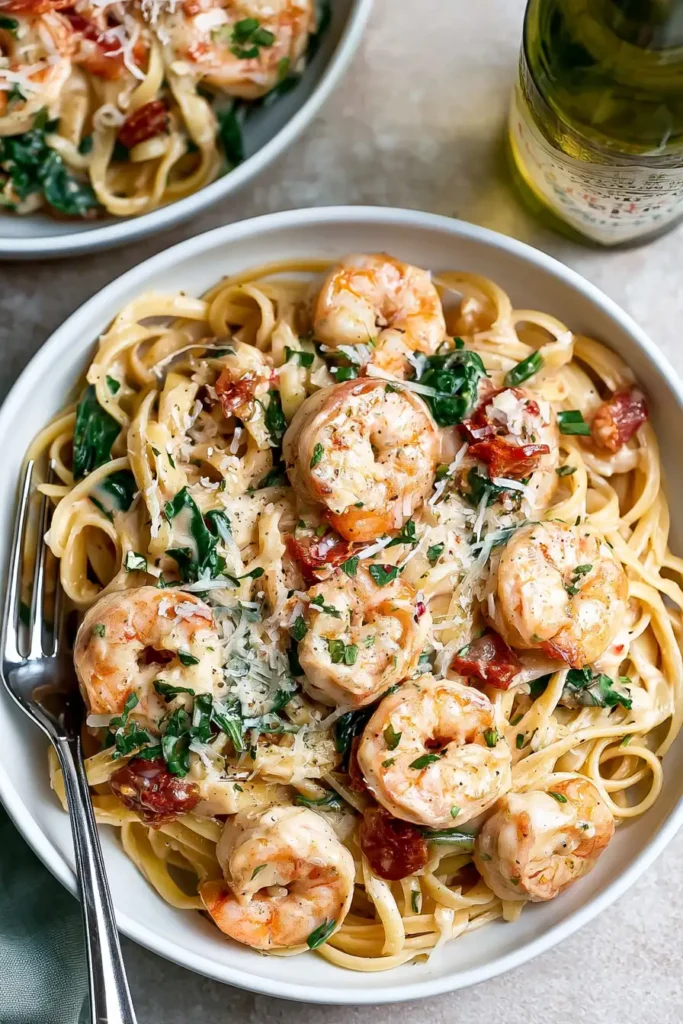
Serve the creamy Tuscan shrimp linguine while warm, making sure each portion includes plenty of shrimp, sun-dried tomatoes, spinach, and sauce.
Notes for the Best Creamy Tuscan Shrimp Linguine
- Choose your cooking liquid: A splash of stock gives the sauce a savory depth, while cider adds a slightly fruity note. Either option can complement the sun-dried tomatoes and cream.
- Keep the heat gentle: Once the cream is added, maintain a gentle simmer rather than allowing the sauce to boil rapidly.
- Adjust the consistency: If the sauce seems too thick, stir in a small splash of water from the cooked pasta, if available. Add it gradually until the sauce coats the linguine comfortably.
- Add the lemon zest at the end: This preserves its fresh citrus aroma and balances the richness of the cream.
- Serve immediately: The sauce thickens as it cools, so the pasta is at its best shortly after everything has been combined.
Common Mistakes to Avoid
Overcooking the Shrimp
Shrimp can turn rubbery when cooked for too long. Remove them from the skillet as soon as they become pink and opaque, then return them to the sauce near the end. If your shrimp are particularly small, check them early because they will cook faster than larger ones.
Burning the Garlic
Minced garlic cooks quickly, especially in a hot skillet. Keep it moving with a spoon and reduce the heat if it starts browning too rapidly. Burnt garlic can introduce a bitter flavor that is difficult to disguise in a delicate cream sauce.
Boiling the Cream Too Aggressively
High heat is unnecessary once the cream is added. A gentle simmer allows the ingredients to combine without subjecting the sauce to excessive heat. Stir regularly and avoid leaving the skillet unattended.
Cooking the Linguine Too Soft
Overcooked pasta can break apart when tossed with the shrimp and sauce. Follow the package timing and check the linguine near the end of cooking. Aim for al dente pasta that retains a little firmness.
Adding Too Much Liquid at Once
The splash of cider or stock is intended to loosen the aromatics and help form the sauce, not turn it into a watery mixture. Begin with a small amount and add more only if necessary. Remember that the cream will provide most of the sauce’s volume.
Forgetting the Fresh Finishing Ingredients
Parsley and lemon zest contribute more than decoration. They provide fresh, fragrant notes that balance the creamy sauce and rich sun-dried tomatoes. Add them toward the end rather than cooking them for an extended period.
What to Serve With Creamy Tuscan Shrimp Linguine
This pasta is a satisfying main course, so the best side dishes are those that add freshness, crunch, or a little contrast without competing with the creamy sauce.
Gale Force Garlic Bread Recipe | ItsOnly.Recipes
1. Garlic Bread
Crusty garlic bread is ideal for soaking up the creamy tomato sauce left on the plate. Choose a crisp exterior and a soft center for a pleasing contrast with the silky linguine.
Mediterranean Dinner Salad | Nourishing Meals®
2. Fresh Green Salad
A simple salad with leafy greens, cucumber, and cherry tomatoes adds crunch and freshness. A light lemon vinaigrette complements the citrus zest in the pasta.
Plate with asparagus and lemon on a black background
3. Roasted Asparagus
Tender asparagus with lightly browned edges provides a fresh vegetable side. Its mild, earthy flavor works well alongside the shrimp, spinach, and creamy sauce.
Roasted Broccoli with Lemon and Garlic Recipe | ItsOnly.Recipes
4. Roasted Broccoli
Roasted broccoli adds texture and a slightly nutty flavor. Keep the seasoning simple so it complements the pasta instead of overpowering the garlic and sun-dried tomatoes.
Fresh summer salad bowl with tomatoes, cucumbers, red onions, basil and olive oil dressing.
5. Tomato and Cucumber Salad
A refreshing tomato and cucumber salad brings juicy, crisp textures to the meal. A modest drizzle of olive oil and a little lemon juice are enough to finish it.
For a simple dinner, pair the linguine with garlic bread and a green salad. If you prefer a lighter meal, roasted vegetables provide a fresh counterpoint to the cream sauce.
Storage Instructions
Refrigerating Leftovers
Allow leftover pasta to cool slightly, then transfer it to an airtight container and refrigerate promptly. For the best quality and food safety, eat it within 2 days, particularly because it contains cooked seafood and cream.
Avoid leaving cooked shrimp or cream-based pasta at room temperature for more than two hours, or one hour when the temperature is above 90°F (32°C).
Reheating Creamy Shrimp Linguine
The stovetop is a good option for reheating this dish. Place the leftovers in a skillet over low heat and add a small splash of water or stock to loosen the sauce. Stir gently until the pasta and shrimp are heated through.
Avoid prolonged heating, as shrimp can become tough and the sauce may thicken excessively. You can also use a microwave, heating the pasta in short intervals and stirring between each one. Make sure the entire portion reaches 165°F (74°C).
Can You Freeze It?
Freezing is not recommended for the best texture. Cream-based sauces can separate after thawing, and cooked shrimp and linguine may become softer. If you need to prepare components ahead, it is better to prepare the chopped ingredients in advance and cook the pasta and shrimp close to serving time.
Make-Ahead Preparation
You can mince the garlic, dice the shallot, chop the sun-dried tomatoes and parsley, and zest the lemon ahead of time. Store the prepared ingredients separately in covered containers in the refrigerator. For the freshest texture, cook the shrimp, prepare the cream sauce, and combine everything shortly before serving.
Estimated Nutrition
The following values are approximate estimates per serving, assuming the recipe makes four servings. Actual nutrition will vary with the type of cream, the specific sun-dried tomatoes used, and the final portion sizes.
| Nutrient | Estimated amount per serving |
|---|---|
| Calories | 650–750 kcal |
| Protein | 30–40 g |
| Carbohydrates | 60–75 g |
| Fat | 25–35 g |
| Fiber | 4–7 g |
These figures are general estimates rather than laboratory-verified nutritional values. For more precise results, calculate the nutrition using the labels of the specific ingredients you use.
Frequently Asked Questions
Can I use frozen shrimp?
Yes. Frozen shrimp are suitable as long as they are thawed completely before cooking. Drain them well and pat them dry with paper towels to remove excess moisture. Season them as directed and cook until pink and opaque.
Can I use a different type of pasta?
Linguine is ideal for this recipe, but other long pasta shapes can work if needed. Fettuccine and spaghetti are reasonable alternatives because they also mix well with creamy sauces. Follow the cooking instructions on the package and aim for an al dente texture.
Can I use heavy cream instead of single cream?
The supplied recipe calls for pouring or single cream. Heavy cream can produce a thicker, richer sauce, so the final consistency will be different. If you make this substitution, warm the sauce gently and adjust its consistency gradually if needed.
What can I use instead of stock?
A splash of cider is the alternative specified in this recipe. Either cider or stock can help loosen the garlic and shallot mixture. Choose stock for a savory flavor or cider for a subtle fruity note.
How do I stop the sauce from becoming too thick?
Keep the heat moderate and avoid reducing the cream for too long. If the sauce thickens before the pasta is fully coated, add a small splash of water from the cooked linguine and stir. Add only enough to achieve a smooth, spoonable consistency.
Can I prepare this recipe ahead of time?
You can prepare and chop the ingredients in advance, but the finished dish is best served fresh. Shrimp can become firm when reheated repeatedly, and creamy sauces often thicken during storage. Preparing the ingredients beforehand makes the final cooking process easier without compromising the texture as much.
A Creamy Pasta Dinner Worth Making
Creamy Tuscan shrimp linguine brings together tender seafood, garlic, sun-dried tomatoes, spinach, and a smooth cream sauce in one comforting meal. Lemon zest and fresh parsley provide the finishing touches that make the flavors feel balanced rather than overly rich. Serve it straight from the skillet with a crisp salad or warm garlic bread for a satisfying dinner that feels special without requiring an elaborate menu.
Print
Creamy Tuscan Shrimp Linguine
- Total Time: 35 minutes
- Yield: 4 servings 1x
Description
Creamy Tuscan shrimp linguine features tender shrimp, sun-dried tomatoes, baby spinach, and garlic in a silky cream sauce finished with fresh lemon zest and parsley. This comforting pasta dinner is full of savory flavor and perfect for a satisfying weeknight meal or a special dinner at home.
Ingredients
- 1 pound (450g) raw shrimp, peeled and deveined
- 1 tsp salt
- 1 tsp garlic granules
- ¼ tsp ground black pepper
- 2 tbsp olive oil
- 4 large garlic cloves, minced
- Splash of cider or stock
- 1 tbsp butter
- 1 shallot, finely diced
- 3 ½ oz (150g) sun-dried tomatoes, chopped
- 1 ½ cups (300g) cream, pouring or single
- 3 handfuls baby spinach
- Zest of 1 lemon
- 2 tbsp chopped fresh parsley
- 10 ½ oz (300g) dried linguine, cooked until al dente
Instructions
- Pat the shrimp dry and season with the salt, garlic granules, and ground black pepper. Cook the linguine in a large pot according to the package instructions until al dente, then drain.
- Heat the olive oil in a large skillet over medium heat. Add the seasoned shrimp and cook until pink and opaque, turning as needed. Transfer the cooked shrimp to a plate.
- Add the minced garlic and diced shallot to the skillet. Cook, stirring, until fragrant and softened. Add a splash of cider or stock to loosen the flavorful ingredients from the bottom of the pan.
- Add the butter and stir until melted. Add the chopped sun-dried tomatoes and mix to distribute them throughout the aromatics.
- Pour in the cream and stir to combine. Warm gently, avoiding a vigorous boil. Add the baby spinach and stir until the leaves wilt into the sauce.
- Return the cooked shrimp to the skillet. Add the drained linguine and toss until the pasta is evenly coated in the creamy sauce.
- Finish with the lemon zest and chopped fresh parsley. Stir gently, ensure the shrimp are thoroughly cooked and the dish is heated through, then serve warm.
Notes
- Use stock or cider for the splash of cooking liquid, depending on your preferred flavor.
- Keep the heat gentle after adding the cream to help maintain a smooth sauce.
- If the sauce becomes too thick, add a small splash of pasta water and stir until it reaches your preferred consistency.
- Prep Time: 15 minutes
- Cook Time: 20 minutes
- Category: Recipes
- Method: Stovetop
- Cuisine: Italian-American inspired
Nutrition
- Serving Size: Approximately 1/4 of the finished recipe
- Calories: 700 kcal
- Sugar: 7 g
- Sodium: 950 mg
- Fat: 32 g
- Saturated Fat: 13 g
- Unsaturated Fat: 17 g
- Trans Fat: 0.5 g
- Carbohydrates: 70 g
- Fiber: 5 g
- Protein: 34 g
- Cholesterol: 220 mg
Keywords: creamy Tuscan shrimp linguine, creamy shrimp pasta, Tuscan shrimp pasta, shrimp linguine recipe, sun-dried tomato shrimp pasta, garlic cream sauce pasta
Leave a Comment