
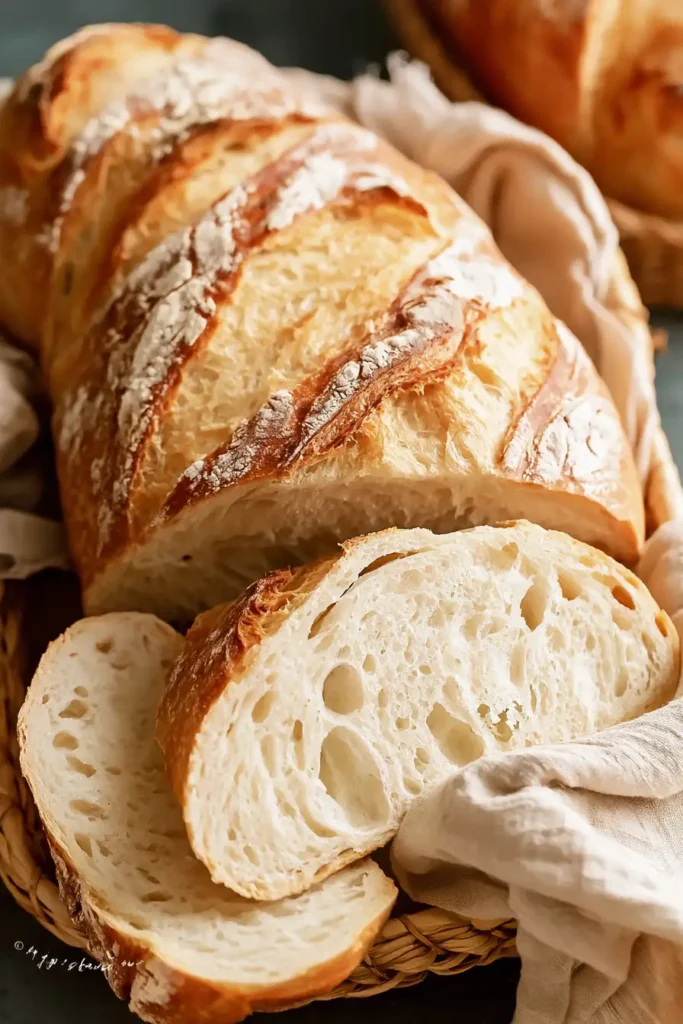
Freshly baked French bread has a beautiful golden crust, a soft and fluffy center, and that irresistible homemade bakery aroma. This easy French bread recipe uses simple pantry ingredients and doesn’t require any complicated techniques, making it a wonderful choice for beginner bakers and anyone who enjoys fresh bread at home.

With active dry yeast, warm water, a little sugar, olive oil, salt, and all-purpose flour, you can make a delicious loaf with a lightly crisp exterior and tender interior. Serve it alongside soups, pasta, salads, or your favorite dinner, or simply enjoy a warm slice with butter.
Why You’ll Love This Easy French Bread Recipe
- Simple pantry ingredients: You only need six basic ingredients to make homemade French bread.
- Beginner-friendly: The dough comes together with straightforward steps that are easy to follow.
- Versatile: This bread works beautifully for sandwiches, garlic bread, bruschetta, and everyday meals.
- Wonderful texture: Enjoy a golden outside with a soft, fluffy center.
- Budget-friendly: Making bread at home is an affordable way to keep fresh bread on the table.
- Perfect for sharing: A homemade loaf makes a lovely addition to family dinners and casual gatherings.
Preparation and Tools
Before starting, gather everything you need so the bread-making process goes smoothly.
Essential equipment:
- Large mixing bowl for preparing the dough.
- Measuring cups and spoons for accurate ingredient measurements.
- Wooden spoon or sturdy spatula for mixing.
- Clean kitchen towel or plastic wrap for covering the dough.
- Baking sheet for shaping and baking the loaf.
- Sharp knife for making shallow cuts across the bread.
- Wire cooling rack for cooling the finished loaf.
Make sure your mixing bowl and work surface are clean and dry. Measure the ingredients before beginning, and have a little extra flour available for dusting your work surface if needed.
Preparation Tips for the Best Homemade French Bread
A few small details can make a noticeable difference in the texture and consistency of your bread.
Check your yeast: Active dry yeast should become foamy after being combined with warm water and sugar. If it doesn’t show signs of activity, the yeast may be old or the water temperature may not have been suitable.
Use warm, not hot, water: Warm water helps activate the yeast. Water that is too hot can damage the yeast and prevent the dough from rising properly.
Add the flour gradually: Start with 3 cups of flour and add more as needed, up to 3 1/2 cups. Different brands of flour can absorb moisture differently, so the dough’s consistency is more important than using the entire amount.
Avoid adding too much flour: The dough should be soft and slightly tacky rather than dry and stiff. Too much flour can produce a dense loaf.
Give the dough enough time to rise: Yeast needs time to work. Keep the dough covered in a warm, draft-free place until it has doubled in size.
Ingredients for Easy French Bread
This homemade French bread recipe uses six simple ingredients, each contributing to the bread’s flavor, structure, and texture.
- Active dry yeast: The yeast makes the dough rise, creating a light and airy interior.
- Granulated sugar: A small amount of sugar helps activate the yeast and contributes to the bread’s flavor.
- Warm water: Water combines the ingredients and provides the moisture needed to develop the dough.
- Salt: Salt balances the flavor and helps control yeast activity.
- Olive oil: Olive oil adds a little richness and helps create a tender texture.
- All-purpose flour: Flour provides the structure that holds the loaf together. Begin with 3 cups and add more only if necessary.
The balance of these ingredients creates a versatile homemade loaf that is suitable for everyday meals.
How to Make Easy French Bread
Step 1: Activate the Yeast
In a large mixing bowl, combine the active dry yeast, granulated sugar, and warm water.
Stir gently to help distribute the yeast throughout the water. Let the mixture sit until the yeast becomes foamy and shows signs of activation.
This step is important because active yeast helps create the rise needed for a light, fluffy loaf.
Step 2: Add the Remaining Ingredients
Add the salt and olive oil to the activated yeast mixture.
Gradually stir in 3 cups of all-purpose flour until a rough dough begins to form. Continue mixing until the ingredients are incorporated.
If the dough feels excessively sticky and difficult to handle, gradually add more flour from the remaining 1/2 cup.
Avoid adding all the extra flour at once. The goal is a soft, workable dough that isn’t overly dry.
Step 3: Knead the Dough
Transfer the dough to a lightly floured work surface.
Knead until the dough becomes smoother, more elastic, and less sticky. As you work, fold the dough over itself and press it forward with the heel of your hand.
Continue until the dough feels cohesive and springs back slightly when gently pressed.
Proper kneading helps develop gluten, which gives the finished bread its structure and chewy texture.
Step 4: Let the Dough Rise
Place the kneaded dough in a lightly greased bowl and cover it with a clean kitchen towel or plastic wrap.
Leave it in a warm, draft-free location until it has doubled in size.
The rising time will depend on the temperature of your kitchen and the activity of your yeast. Rather than relying only on the clock, look for a noticeable increase in the dough’s volume.
Step 5: Shape the French Bread
Once the dough has risen, gently transfer it to a lightly floured surface.
Shape it into a long loaf, keeping the dough relatively even in thickness so it bakes consistently.
Transfer the shaped loaf to a baking sheet. Avoid handling the dough too aggressively, as excessive pressure can remove some of the air developed during rising.
Step 6: Bake Until Golden
Place the prepared loaf in the oven and bake until the exterior becomes golden brown and the bread is cooked through.
The exact baking temperature and time should follow the original recipe’s specified baking instructions.
Once baked, transfer the French bread to a wire cooling rack.
Allow it to cool before slicing so the interior has time to settle and maintain its texture.
Recipe Notes
- Flour adjustment: The recipe calls for 3 to 3 1/2 cups of flour. The exact amount depends on how much moisture your flour absorbs.
- Yeast freshness: Check the expiration date on your active dry yeast before beginning.
- Dough consistency: A slightly tacky dough is preferable to one that is overly firm or dry.
- Slicing: Use a serrated bread knife to make clean slices without crushing the soft interior.
Common Mistakes to Avoid
1. Using water that is too hot
Very hot water can damage the yeast and prevent the dough from rising. Use warm water instead.
2. Skipping the yeast activation
Allowing the yeast mixture to become foamy helps confirm that the yeast is active before you continue with the recipe.
3. Adding too much flour
Excess flour can make the bread heavy and dry. Add it gradually and stop when the dough reaches a soft, manageable consistency.
4. Not kneading enough
Insufficient kneading can leave the dough without the structure needed for a properly textured loaf. Continue kneading until the dough becomes smooth and elastic.
5. Rushing the rising process
The dough needs sufficient time to expand. Keep it covered in a warm place and wait until it has doubled in size.
6. Cutting the bread too early
Slicing immediately after baking can affect the bread’s interior texture. Let it cool on a wire rack before cutting.
What to Serve With Easy French Bread
Homemade French bread is incredibly versatile and pairs well with everything from comforting soups to hearty pasta dishes. Its soft center and lightly crisp crust make it perfect for soaking up sauces and enjoying alongside your favorite meals.
Here are a few delicious serving ideas:
1. Creamy Tomato Soup
Serve thick slices of French bread with a warm bowl of tomato soup. The bread is perfect for dipping and soaking up the rich, savory tomato flavor.
2. Spaghetti and Meatballs
Add French bread to your next pasta dinner. It is especially delicious alongside spaghetti with marinara sauce and tender meatballs.
3. Garlic Butter
Spread softened butter mixed with garlic over freshly sliced bread for a simple and flavorful side. You can also use the bread as the base for homemade garlic bread.
4. Fresh Garden Salad
Pair a few slices with a crisp salad made with lettuce, tomatoes, cucumbers, and your favorite dressing. The bread makes the meal more satisfying.
5. Cheese and Charcuterie Board
Cut the loaf into slices and serve it with assorted cheeses, olives, and spreads. It makes an excellent addition to a casual appetizer platter.
Storage Instructions
Proper storage helps keep homemade French bread enjoyable after baking.
At Room Temperature: Once the loaf has cooled completely, place it in a bread bag or wrap it loosely in a clean kitchen towel. Keep it in a cool, dry place away from direct sunlight. For the best texture, enjoy it within 2 to 3 days.
Avoid refrigerating homemade French bread because refrigeration can make it stale more quickly.
In the Freezer: French bread freezes well. Allow the loaf to cool completely, then wrap it tightly in plastic wrap or aluminum foil and place it in a freezer-safe bag.
Freeze for up to 2 to 3 months for the best quality.
You can freeze the loaf whole or slice it before freezing. Slicing beforehand makes it easier to remove individual portions whenever needed.
Reheating: For a freshly baked texture, warm the bread in the oven until heated through and the crust becomes slightly crisp again. Individual slices can also be toasted.
Make-Ahead Tip: You can prepare the dough ahead of time and refrigerate it after kneading, allowing it to rise slowly. Keep it covered and bring it back to a workable temperature before shaping. Allow enough time for the dough to rise appropriately before baking.
Estimated Nutrition
The following nutrition information is an estimate based on the supplied ingredients. Actual values will vary depending on the exact flour quantity, loaf size, and serving portions.
Estimated nutrition per serving:
- Calories: 150 kcal
- Carbohydrates: 29 g
- Protein: 4 g
- Fat: 2 g
- Saturated Fat: 0.3 g
- Fiber: 1 g
- Sugar: 1 g
- Sodium: 290 mg
Frequently Asked Questions
1. Can I make French bread with all-purpose flour?
Yes! All-purpose flour works well for this recipe. It creates a soft, tender interior with a pleasant chewy texture. Bread flour can produce a slightly chewier result, but all-purpose flour is a convenient choice for everyday homemade bread.
2. Why didn’t my French bread rise?
There are several possible reasons. Your yeast may be expired or inactive, the water may have been too hot, or the kitchen may have been too cold. Make sure the yeast becomes foamy during activation and give the dough enough time to double in size.
3. How do I know when the dough has risen enough?
The dough should approximately double in size. You can also gently press a floured finger into it. If the indentation slowly springs back, the dough is generally ready for the next step.
4. Can I freeze homemade French bread?
Absolutely. Let the bread cool completely before wrapping it tightly and placing it in a freezer-safe bag. You can freeze it whole or sliced for easier serving.
5. Can I use this bread for garlic bread?
Yes! Slice the cooled loaf, spread each piece with garlic butter, and prepare it using your preferred garlic bread method. It is also delicious with melted cheese and fresh herbs.
6. How do I keep French bread from becoming hard?
Store the cooled loaf in a bread bag or wrap it in a clean kitchen towel. Avoid leaving it uncovered for extended periods. If it becomes slightly stale, warming it in the oven can help refresh the crust.
A Simple Homemade Bread Worth Making Again
Making French bread at home doesn’t have to be complicated. With a handful of everyday ingredients and a little patience while the dough rises, you can prepare a delicious loaf for family meals, sandwiches, and appetizers.
Enjoy it fresh from the oven, serve it with your favorite soup, or turn leftover slices into garlic bread. This easy French bread recipe is a wonderful addition to your collection of homemade baking favorites.
Print
Easy French Bread Recipe
- Total Time: 50 minutes
- Yield: 1 loaf 1x
- Diet: Vegetarian
Description
This easy French bread recipe makes a delicious homemade loaf with a golden crust and soft, fluffy center using six simple pantry ingredients. Perfect for serving with soups, pasta, salads, or garlic butter.
Ingredients
- 2 1/4 tsp Active Dry Yeast
- 1 tbsp Granulated Sugar
- 1 1/4 cup Warm Water
- 1 1/2 tsp Salt
- 1 tbsp Olive Oil
- 3–3 1/2 cups All-Purpose Flour
Instructions
- Combine the active dry yeast, granulated sugar, and warm water in a large mixing bowl. Stir gently and let stand until foamy.
- Add the salt and olive oil to the yeast mixture.
- Gradually mix in 3 cups of all-purpose flour until a rough dough forms. Add more flour as needed, up to 3 1/2 cups, to achieve a soft, workable consistency.
- Transfer the dough to a lightly floured surface and knead until smooth and elastic.
- Place the dough in a lightly greased bowl, cover, and let rise in a warm place until doubled in size.
- Transfer the risen dough to a lightly floured surface and shape it into a long loaf.
- Place the shaped loaf on a baking sheet and bake according to the original recipe’s specified oven temperature and baking time, until golden brown and cooked through.
- Transfer to a wire rack and allow to cool before slicing.
Notes
- Add the flour gradually because the amount needed can vary depending on the flour.
- Make sure the yeast becomes foamy before continuing.
- Allow the loaf to cool before slicing for the best texture.
- Prep Time: 20 minutes
- Cook Time: 30 minutes
- Category: Recipes
- Method: Baked
- Cuisine: French-inspired
Nutrition
- Serving Size: 1/10
- Calories: 150 kcal
- Sugar: 1 g
- Sodium: 290 mg
- Fat: 2 g
- Saturated Fat: 0.3 g
- Unsaturated Fat: 1.5 g
- Trans Fat: 0 g
- Carbohydrates: 28 g
- Fiber: 1 g
- Protein: 4 g
- Cholesterol: 0 mg
Keywords: Easy French Bread Recipe, homemade French bread, French bread loaf, homemade bread recipe, yeast bread

Leave a Comment